
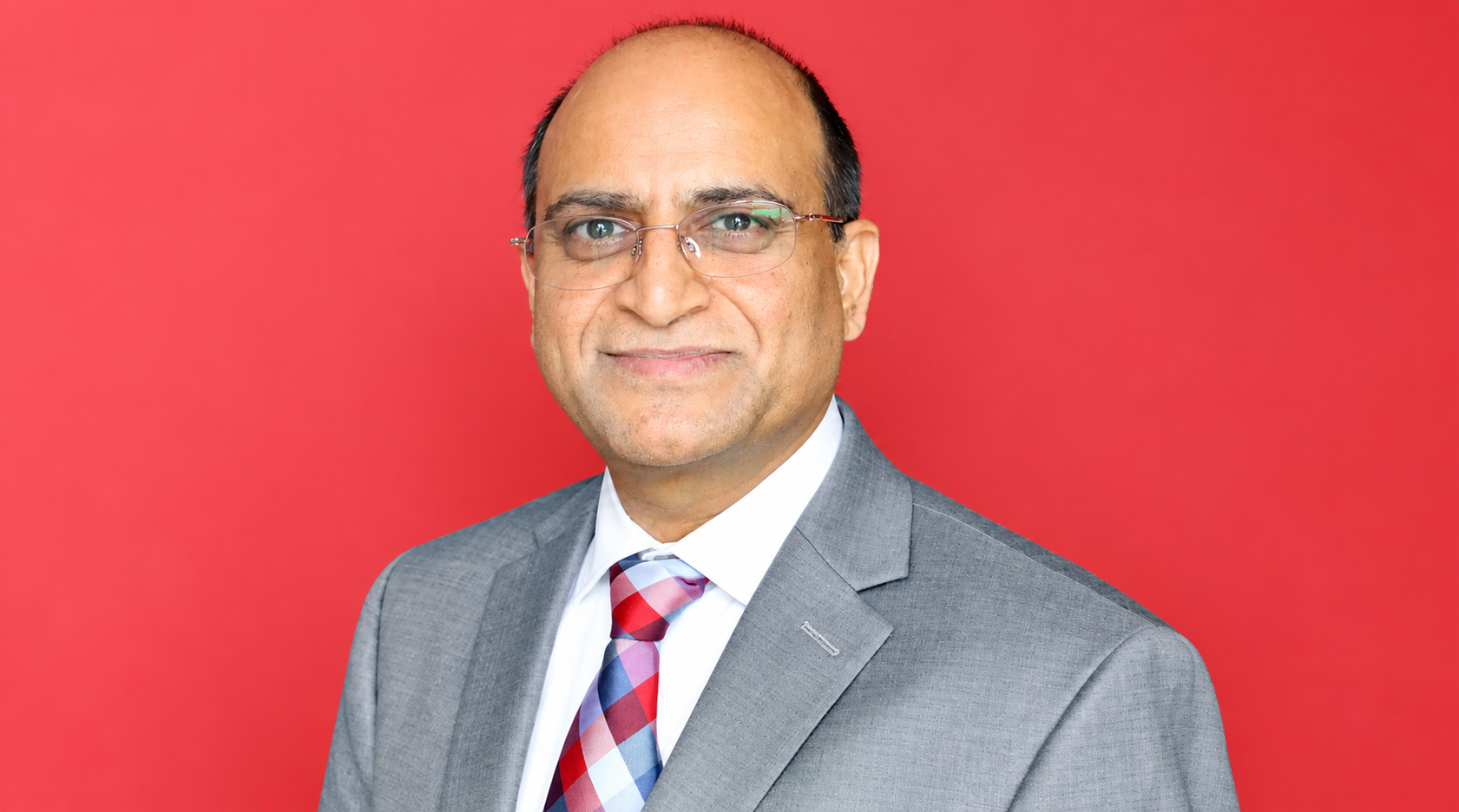
What made you want to do the work you do? Please share the full story.
As a project manager for many years, it was extremely frustrating to see so many smart coworkers that were good at their jobs yet couldn’t pass the PMP exam. Most study guides are very theoretical. So, I created a PMP exam boot camp that teaches PMP content in terms of real-world practices.
My wife, Shobha, and I started PMTI in 2003 out of our house in Dallas. We wrote the training ourselves. We had 12 students in our first class, all passed, and PMTI took off from there.
We were one of the first to offer a money back guarantee because we were confident in our approach, and that guarantee has forced us to continue to improve our training. It’s been twenty years and we’ve had more than 150,000 students from over 100 countries. Every time someone passes that exam it has a ripple effect in their family’s livelihood. That’s the greatest reward.
How is AI changing your business? What changes are you making to adapt?
Ultimately, the exam requires judgement, not memorization. It makes sense, then, that PMTI is incorporating AI to make learning as adaptive and contextualized as possible. Students will be able to call up definitions and practice questions from a chatbot, and our own AI-powered applications will place them in complicated situations to challenge their responses and provide immediate feedback. AI will even be able to mark their practice exams so quickly that PMTI will be able to provide them with personalized learning plans within hours of completion.
Our instructors will be able to use precious classroom-time to dig deeper into gray areas where AI tends to struggle, exploring ethical dilemmas or how to manage competing interests among stakeholders. Our trainers will be challenged to take on more of a coaching role, asking better questions and reading the room, because we know that’s what will keep PMTI relevant.
What are the 3 things you like best about your work and why?
The one thing I like best about my work is the moment a student sees a pass result after years of doubt. That moment carries more weight than any revenue number. I have watched a single mother in Ohio study after night shifts and then pass on her third attempt. I have watched a warehouse supervisor in Texas move into a project lead role within six months.
Those wins repeat because the PMP changes how employers see a person. The student gains a title, a raise and a voice in the room. That change ripples to their kids, their spouse and their community. So the work feels less like a job and more like a chain reaction I get to start.
What are your greatest 3 skills and how have they helped you succeed?
My greatest skill is translating complex project management ideas into plain steps that a tired working adult can use the next morning. That skill helped me build the four-day boot camp because I had to cut 500 pages of theory into 35 hours of practice. It also helped me write PMP exam questions for PMI because every question must test one clear decision.
When a student panics about a process chart, I draw it on a whiteboard in three boxes. That clarity turns fear into action. Over 20 years, that skill has kept our pass rate high and our refund rate low. It also helped me train instructors so the same clarity shows up in every classroom.
Tell us about a time you were dead wrong about something.
In 2011 I pushed a two-day PMP boot camp because I thought busy students wanted less class time. My logic felt solid. Working adults hate long seminars, so a shorter course should sell better. I was dead wrong. Pass rates fell 18 points in one quarter. Students who failed came back angry because they trusted our name. We lost refund money and damaged a reputation we spent eight years building.
So we went back to four days and added more practice exams. That mistake taught me a hard rule. Shortcuts in exam prep cost more than they save. I now ask every instructor one question before any format change. Will this raise the pass rate or just the enrollment rate? If the answer is unclear, we do not ship it.
What is the biggest challenge you face each day and how do you handle it?
The hardest part of each day is keeping our instructors aligned across ten time zones. One trainer may stress risk while another skips it. A student in Singapore then gets a different class than a student in Dallas. That gap hurts our promise of a consistent result.
So every morning I run a 15-minute huddle with the teaching team. We review the same three exam objectives and share one student question from the day before. Then each instructor gets a short note on what to fix. That small habit keeps the student experience steady no matter who teaches. It also catches drift before it becomes a pattern. When a trainer in London raised a concern about our Agile module, we fixed it that week. Without the huddle that issue would have run for months.
What do you value most and why?
The thing I hold dearest is honesty with every student. If a student is not ready for the exam I tell them straight. That honesty hurts in the moment. Yet it saves them money and time. It also keeps our pass rate real. I once told a student to wait three months before testing. He was furious and threatened to leave. He waited, passed on his first try and sent me a thank-you note six months later. That note sits in my desk.
When a student passes after hearing the truth they know the result is earned. That trust lasts longer than any sales pitch. It also protects the money back guarantee because we only promise what we can deliver.
How do you celebrate your victories?
I celebrate a student pass by writing a short note to that person within an hour. Then I take my wife to dinner that same week. The note carries more weight than the dinner. It tells the student their win is seen. It also reminds me why the work exists. Over time those notes fill a drawer in my desk. That drawer is my real trophy case.
Last year a student from Nigeria passed after four attempts. I wrote to her the same day and she replied with a photo of her new badge. That photo now sits on my office wall. The dinner with Shobha marks the week, but the notes mark the mission.
What is your favorite book and why?
My favorite book is The Goal by Eliyahu Goldratt. It follows a plant manager who must fix a failing factory in 90 days. The book turns bottleneck theory into a story. I read it first in 1998 and still use its ideas in every class. It shows that a system slows at one point, not ten. Fix that point and the whole line speeds up. That single idea drives how I teach project flow.
When students complain about missed deadlines, I ask one question. Where does the work pile up? That question comes straight from the book. It moves the talk from blame to system. I keep a copy on my desk and give one to every new instructor on their first day.
What advice would you give to your younger self and why?
I would tell my younger self to teach one small lesson in public every single week starting at age 25. In 1999 I spent six months writing a 300 page study guide that sat on my hard drive because I was scared to share it. Nobody read it and I learned nothing from it. If I had posted just one page each week, I would have collected 52 rounds of feedback in a single year. That feedback would have exposed my weak spots while the stakes were low. Instead I waited until 2003 to teach my first real class.
That delay cost me four years of growth and a lot of confidence. My first public seminar in 2001 had three people in the room and I panicked through the whole hour. If I had practiced weekly for two years before that, I would have walked in calm and ready. So I would tell him to post one short lesson every Monday, even if only his mom watches. Small public reps beat private perfection every time.
Who has been your biggest mentor in life (personal or professional) and how have they helped you?
My wife Shobha has been my biggest mentor in life and in business. In 2003 she read the first draft of our boot camp manual and marked 40 pages with a red pen. She told me the risk chapter put her to sleep and I rewrote it in two days. That honesty saved the course before a single student paid us. She also pushed me to add the money back guarantee when I was terrified of refunds.
We had $12,000 in the bank and I thought one bad quarter would kill us. She said if you do not believe in your own teaching, why should students believe in it. That argument changed how I run the company. She still reads my rough drafts and she still marks them in red. That habit keeps me honest and it keeps our courses sharp.
Just for fun, what is your favorite ice cream flavor?
My favorite ice cream flavor is Blue Bell Butter Pecan because it tastes like a Texas Friday night. The base is rich and custard like and the pecans are roasted just enough to crunch. A hint of salt cuts the sweetness so it never feels heavy. I keep a pint in the freezer and I eat one scoop from a coffee mug after a long teaching day.
That mug trick matters because a bowl feels like a dessert and a mug feels like a reward. I first tried this flavor at a Blue Bell creamery in Brenham in the late 1990s and I never switched. The texture changes from bite to bite and that keeps it interesting. A classic flavor done well beats a fancy flavor done poorly.