
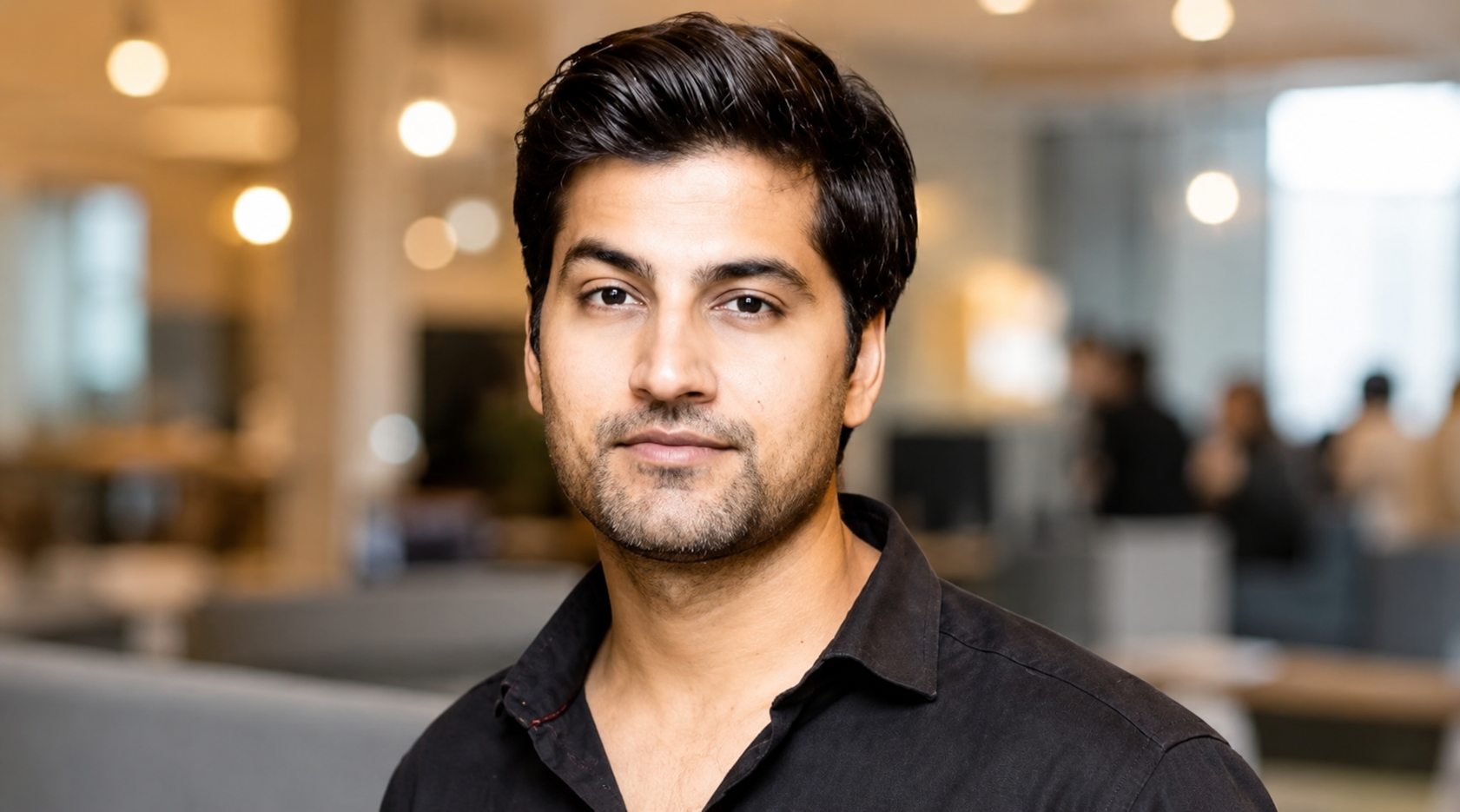
What made you want to do the work you do? Please share the full story.
Ayurveda was not something I discovered later in life, it was simply how my family dealt with health from the time I was young. That familiarity turned into a real calling when I started my B.A.M.S in 2003 at one of the oldest Ayurveda universities in North India, and I graduated in 2009 as gold medalist, receiving the award in the presence of the President of India. From there I pursued my M.D. in Internal Medicine, focusing my research on male infertility and how Ayurveda medicine addresses it, which pushed me deeper into clinical study rather than just traditional practice. I later trained under Dr. L Mahadevan in Kanyakumari to learn Guna Siddhanta, spent time in Kerala mastering Panchakarma through the Ashtavaidya tradition, and picked up Marma therapy and Nadi Pariksha, pulse diagnosis, along the way. After years teaching as Assistant Professor in Punjab and serving as an Ayurveda Medical Officer for the state government, I wanted to take everything I had learned and make it available to people outside India, which is what led me to Siddhi Yoga.
How is AI changing your business? What changes are you making to adapt?
AI has mostly changed the administrative side of my work, I now use it to organize patient intake history and summarize prior symptoms before a consultation begins, which saves real time. What I have not changed is how I actually diagnose or treat someone, because Ayurveda depends on reading a patient’s pulse and constitution directly, and no tool replicates that. The adaptation I have made is spending more time writing detailed explanations of my training and methods online, since patients increasingly arrive having already researched terms like Panchakarma or Nadi Pariksha before we speak.
If AI is impacting your business, please tell us 3 things you expect to change in the near future.
First, I expect patients to arrive with even more specific prior research, meaning consultations will start further along than they used to, with less time spent on basic education. Second, I think administrative work like scheduling and note-taking will become almost fully automated, freeing up more of my actual clinical hours. Third, I expect competition to increase from practitioners who market themselves using AI generated content without real training behind it, which makes documenting genuine lineage and credentials more important than ever.
What are your greatest 3 skills and how have they helped you succeed?
My clinical training in Internal Medicine, layered on top of traditional Ayurveda, lets me bridge two systems of diagnosis rather than relying on just one, which has made my treatment plans more thorough for complex cases like infertility. My skill in Nadi Pariksha, pulse diagnosis, is something few practitioners outside India have mastered, and it lets me catch imbalances that a standard consultation would miss entirely. My years teaching as Assistant Professor also sharpened my ability to explain complicated Ayurvedic concepts simply, which matters enormously when a patient has never encountered this system of medicine before.
Tell us about a time where you saw a surprising outcome that you did not expect.
A patient came to me for chronic digestive issues that had not responded to years of conventional treatment, and based on his pulse reading I suspected the root cause was actually related to stress patterns rather than diet, which is not where most practitioners would look first. After a Panchakarma protocol focused on nervous system balance rather than digestion directly, his symptoms improved within weeks, which even surprised me given how long the condition had persisted. It reinforced something I had learned from Guna Siddhanta, that the root imbalance is often somewhere other than where the symptom shows up.
What is the biggest challenge you face each day and how do you handle it?
The biggest challenge is treating patients remotely who are used to conventional medicine and expect quick fixes, when Ayurveda often requires patience and lifestyle change alongside any treatment. I handle it by being direct in the first consultation about what a realistic timeline looks like, using their pulse reading and constitution to explain why their specific case will respond the way it will, rather than making general promises. Patients tend to stay committed once they understand the reasoning behind the pace, rather than feeling like they are being asked to simply wait it out.
What is a habit you try to stick to and how has it helped you?
I practice yoga daily, which I have kept up since completing my 200-hour teacher training in 2015. It keeps my own body and mind steady enough that I can sit with a patient for a long consultation without losing focus, and it also means I am not just prescribing movement and breathwork theoretically, I am speaking from something I do myself every morning.
What achievement are you the proudest of and why?
Being named gold medalist at graduation in 2009, receiving it in the presence of President Pranab Mukherjee, is the achievement I come back to most. It was not just personal recognition, it validated years of study during a period when Ayurveda was still fighting for legitimacy alongside conventional medicine in academic circles, and it gave me the confidence to pursue research into areas like male infertility that weren’t heavily studied within Ayurveda at the time.
Who is your favorite motivational speaker and why?
I would not point to a motivational speaker so much as my teacher, Dr. L Mahadevan in Kanyakumari, who taught me Guna Siddhanta. His way of explaining complex Ayurvedic principles through patience and real clinical cases motivated me more than any speech could, because it was rooted in decades of hands-on practice rather than performance.
What advice would you give to your younger self and why?
I would tell myself not to rush toward specialization too quickly. Early on I wanted to master Panchakarma and Nadi Pariksha as fast as possible, but the years I spent as Assistant Professor teaching basic Ayurveda concepts to students ended up sharpening my own understanding far more than jumping straight into advanced practice would have. Slowing down to teach the fundamentals made me a better diagnostician later.
Who has been your biggest mentor in life (personal or professional) and how have they helped you?
Dr. L Mahadevan has been the biggest mentor in my professional life. Studying Guna Siddhanta under him exposed me to a wide range of clinical cases and Panchakarma techniques I would not have encountered otherwise, and his teaching style shaped how I now explain Ayurveda to my own patients, breaking down principles that can otherwise feel abstract into something clinically useful.
Just for fun, what is your favorite food?
I enjoy a simple khichdi, rice and lentils cooked with turmeric and ghee. It is a staple in Ayurvedic cooking for good reason, easy to digest and grounding, and I genuinely prefer it to anything more elaborate after a long day of consultations.