
Editor’s Note: This interview was recreated from publicly available sources and was not conducted by Inspirery.
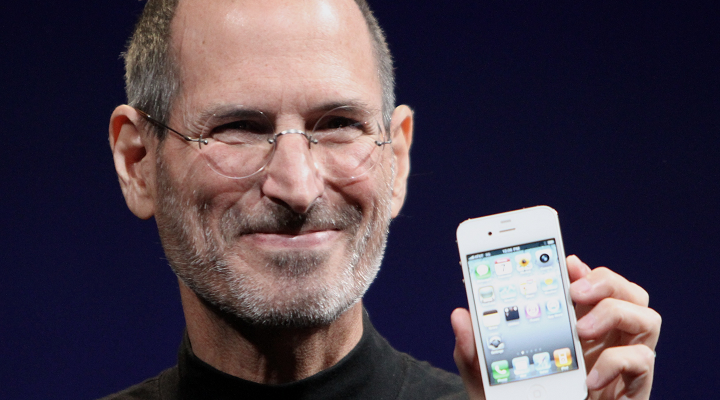
Image Attribution: Matthew Yohe, CC BY-SA 3.0, via Wikimedia Commons

Steve Jobs transformed multiple industries not simply by inventing products, but by relentlessly redefining what great products should feel like. As the co-founder of Apple, the driving force behind Pixar’s rise, and the leader who orchestrated one of the greatest corporate turnarounds in history, Jobs consistently challenged conventional thinking. His obsession with simplicity, craftsmanship, and the intersection of technology with the humanities reshaped personal computing, digital music, smartphones, animation, and publishing.
His journey was anything but straightforward. After co-founding Apple in 1976, Jobs was famously forced out of the company he helped create. Instead of retreating, he founded NeXT and invested in Pixar, experiences that profoundly refined his leadership and product philosophy. When he returned to Apple in 1997, the company was struggling. Over the next fourteen years, he led an extraordinary resurgence that produced the iMac, iPod, iPhone, iPad, and one of the world’s most valuable brands.
For entrepreneurs, Jobs’ story is less about technology than about conviction. He believed breakthrough innovation required saying no to almost everything, hiring exceptional people, caring deeply about details others ignored, and building products that customers didn’t yet know they wanted. His legacy continues to influence founders, designers, executives, and creators around the world.
Your career is often described as a story of innovation, but your biggest turning point may have been being fired from Apple. How did that experience change you as a leader?
Being removed from Apple was devastating personally, but incredibly valuable professionally. Success had made me feel like I had to know every answer, and suddenly I had to start over.
Founding NeXT allowed me to think about software architecture, company culture, and product development without the pressure of a massive public company. At the same time, Pixar taught me lessons about nurturing creative talent rather than simply managing engineers. Those experiences made me a better executive.
When I returned to Apple, I was more focused. I understood that leadership isn’t about winning every argument—it’s about assembling remarkable people, establishing an uncompromising vision, and removing distractions so exceptional work can happen. Ironically, losing Apple the first time made me capable of leading it the second time.
Apple became famous for doing fewer things than its competitors. Why was saying “no” so central to your philosophy?
Most companies believe growth comes from adding more products, more features, and more markets. I believed the opposite.
Focus creates excellence.
Every product, meeting, and initiative consumes finite energy. If you spread that energy across dozens of priorities, you rarely build anything extraordinary. At Apple, we eliminated far more projects than we approved.
Simplicity is not about making something look minimal. It’s about removing everything unnecessary until only the essential remains. That process is difficult because every feature has someone advocating for it. Great companies develop the discipline to resist adding complexity simply because they can.
You often talked about combining technology with the liberal arts. Why was that intersection so important?
Technology by itself rarely changes people’s lives.
People don’t fall in love with processors or specifications—they connect with experiences. Design, psychology, storytelling, music, typography, and art all influence how someone feels when using a product.
That belief shaped everything from Macintosh typography to the packaging of an iPhone. Engineers solved technical problems, but designers, artists, and writers helped transform technology into something emotionally meaningful.
Innovation happens when multiple disciplines collide rather than remaining isolated.
Many entrepreneurs obsess over customer feedback. Yet you argued that customers don’t always know what they want. How do you reconcile those ideas?
Customers are excellent at describing frustrations with current products. They are much less effective at imagining products that have never existed.
Our responsibility wasn’t to ignore customers—it was to understand them deeply enough to anticipate needs before they became obvious.
The iPhone wasn’t created because customers requested a touchscreen computer in their pocket. It emerged because we believed advances in software, hardware, and interface design could create an experience dramatically better than existing phones.
Listening matters. Vision matters even more.
Perfectionism has often been described as both your greatest strength and your greatest weakness. How do you view it?
High standards inevitably create tension.
If you’re trying to build something truly exceptional, average work cannot be acceptable simply because deadlines are approaching. I demanded excellence because customers experience every compromise, even if they can’t always explain it.
At the same time, intensity carries costs. Some colleagues found me inspiring, while others found me extraordinarily demanding. Looking back, there were certainly moments where I could have communicated with greater empathy while maintaining the same standards.
The objective was never perfection for its own sake. It was creating products that people would genuinely love using years later.
Apple repeatedly entered industries that already had established competitors. What gave you confidence to challenge entire markets?
We rarely asked whether a market was crowded.
Instead, we asked whether existing products delivered a great experience.
Personal computers were complicated. MP3 players were frustrating. Mobile phones were cluttered. Tablets hadn’t fulfilled their promise.
If an industry normalizes mediocre products, that’s often where opportunity exists. The goal isn’t to invent a category every time. It’s to reinvent the experience so thoroughly that customers rethink what is possible.
Your Stanford commencement address continues to inspire entrepreneurs worldwide. If there is one lesson you hope endures, what would it be?
Life cannot be planned with complete certainty.
Many of the experiences that seemed disappointing—including dropping out of college, leaving Apple, and facing serious illness—ultimately shaped the work I became capable of doing.
Curiosity matters. Courage matters. Mortality provides perspective.
Knowing our time is limited helps eliminate fear of failure and social expectations. It reminds us to spend our lives building things that genuinely matter rather than merely chasing approval.
Sources and Further Reading
- The Steve Jobs Archive
- Steve Jobs: In His Own Words (Steve Jobs Archive)
- Walter Isaacson’s *Steve Jobs*
- 1991 Steve Jobs Interview Transcript (Joseph M. Juran Collection)
- The Real Leadership Lessons of Steve Jobs (Harvard Business Review)