
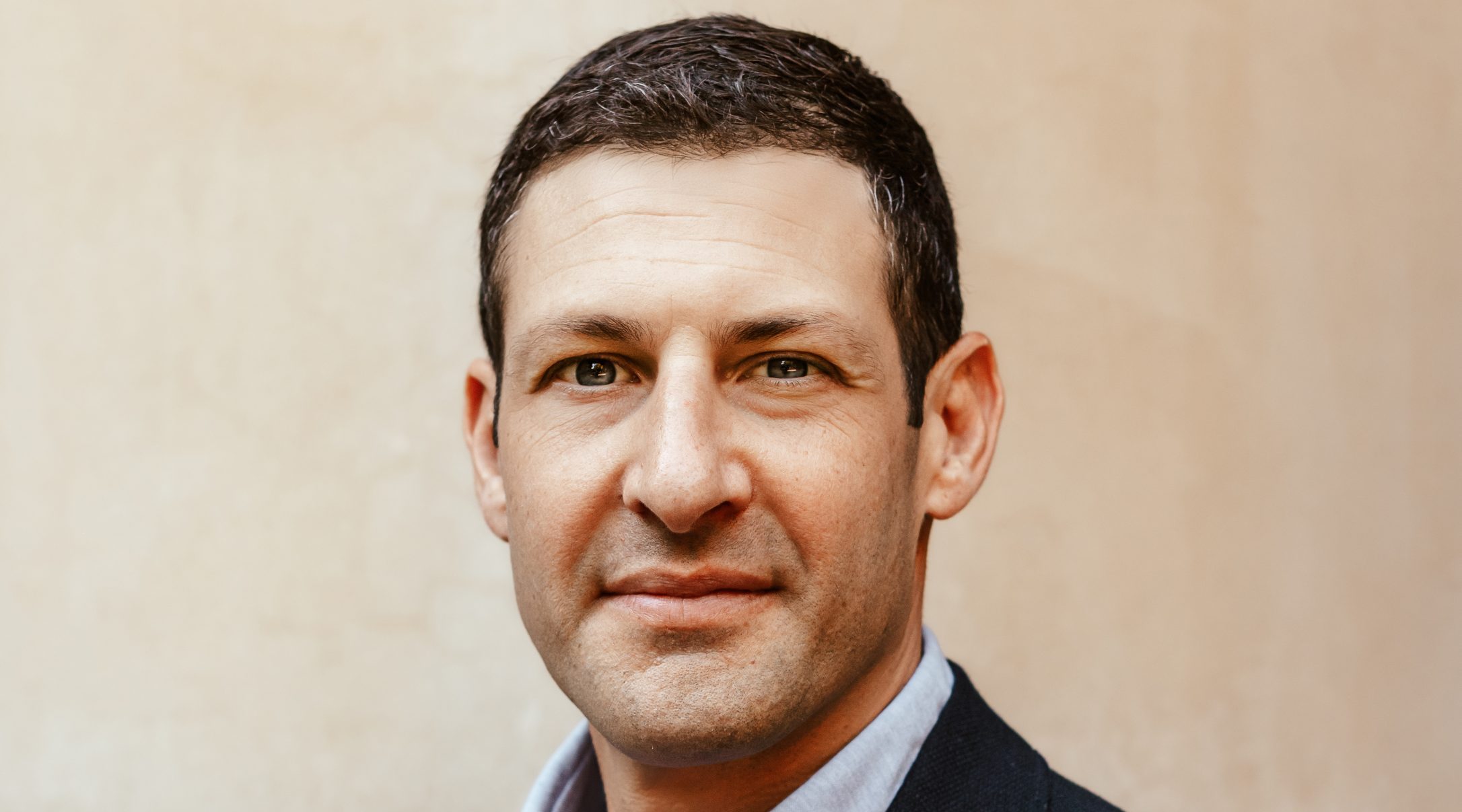
What made you want to do the work you do? Please share the full story.
I’ve loved movies for as long as I can remember. Some of my clearest memories growing up are tied to films that made me want to rise to the occasion when things got difficult. Movies like Top Gun, Black Hawk Down, Gladiator, and Argo stayed with me long after they ended because they weren’t just entertaining; they meant something.
I served as a Marine infantry officer after college and built my career in tech, specifically software that helps people make sense of large amounts of data. Neither one had much to do with movies, but storytelling was always sitting there in the background, waiting.
I looked around and saw an opportunity. The barriers to making films are changing; audiences are telling us they’re hungry for better stories, and I think Hollywood has become too focused on franchises, algorithms, and managing risk. I don’t think the market is asking for more content. I think it’s asking for stories people will genuinely remember.
One of the ideas that has always resonated with me is that, in America, ordinary people are capable of extraordinary things. The best American films have always reflected that belief. And I want to tell those stories. That’s why I founded Rough Cut Entertainment.
Tell us the surprisingly easy and surprisingly difficult things about your business.
The surprisingly easy part: finding out how many people are hungry for the same thing I am. Everybody—not just industry people—still wants to talk about great movies.
You bring up Indiana Jones, Gladiator, Black Hawk Down, Heat, The Equalizer, The Fugitive, Man on Fire, Tombstone, or Ford v Ferrari, and suddenly people are telling you where they first saw it, who they watched it with, the scene they still quote.
For all the discussion about changing technologies and viewing habits, people still crave stories that make them feel something. That’s encouraging; the audience hasn’t changed nearly as much as people think. They still want characters they root for.
The hard part is everything after the idea. From what I’ve learned so far, filmmaking runs on trust, relationships, timing, persistence, and a small army of very talented people all rowing in the same direction. Plus a little luck.
What are the things you like best about your work and why?
The thing I enjoy most is watching a rough idea start to take shape, sitting with a writer or producer while something half-formed turns into a story that could actually move an audience.
I also genuinely enjoy the process of putting together a team from scratch. Film is collaborative and unpredictable in a way that’s very different from the other industries I’ve worked in. When the right group of people locks into the same vision, it takes on a life of its own. It’s incredibly energizing, and a little mystical.
What are the three things you need in work to achieve purpose? Why are they important to you?
A mission I’d be embarrassed to explain badly, people around me who’d tell me if an idea was bad, and enough real risk that failure is actually on the table.
The first one is why I started Rough Cut instead of something safer. If I can’t say what we’re building and why in one sentence I actually believe, I lose interest fast.
The second matters more than people admit. I want to be around people whose opinion I care about, people who’d push back instead of nodding along. That’s kept me honest more than once already.
The third is risk. I’ve never done well in a job where the outcome of the exercise was already decided. If it’s not possible to fail, I’m not that interested.
Tell us about a time where you saw a surprising outcome that you did not expect.
One thing that surprised me once I started having more conversations in the film world was how many people, inside and outside the industry, agreed that audiences are craving different kinds of stories right now.
From the outside, people sometimes assume Hollywood is a completely unified machine where everybody thinks the same way creatively. That hasn’t been my experience.
A lot of writers, producers, actors, and executives still love emotionally grounded movies with heroes, stakes, tension, and sincerity. A lot of them miss those movies too.
What surprised me is how quickly those conversations turned personal. People don’t just talk about movies, they talk about how those movies shaped them growing up. Why those stories mattered.
That gave me a lot of confidence in what we’re trying to build at Rough Cut.
What is the biggest challenge you face each day and how do you handle it?
Honestly? Most days it’s just deciding what actually matters. Ten things land on my desk before lunch— financing, scheduling, a contract that needs another look, a call I should’ve made yesterday, and most of them aren’t real problems. They just feel urgent.
People see filmmaking as glamorous, but at this stage, most of the actual work is figuring out which fires are real and which ones will burn out on their own if I ignore them. I try to spend my energy on the handful that actually matter in six months and let the rest go.
The other thing that helps is just moving. Sitting on a decision doesn’t make it better; it just delays finding out I was wrong. I’d rather take a swing and course-correct than wait around for certainty that isn’t coming.
What is a habit you try to stick to and how has it helped you?
I try to act quickly, you know, pick up the phone, get on the plane. People sit on ideas too long, waiting for the perfect moment, and usually that moment never comes. A lot of the best opportunities in my life happened because somebody decided to make a call, send an email, take a meeting, or move before they felt completely ready.
That said, fast and reckless aren’t the same thing. Moving quickly in the wrong direction just gets you lost faster.
That’s been especially useful at Rough Cut, since I’m still new to the industry and don’t have the luxury of waiting until I feel ready.
What are you doing that is difficult? Please explain.
Building an independent film studio is objectively difficult.
The industry is changing rapidly. Audience behavior is changing. Financing is changing. Distribution is changing. Streaming disrupted almost everything, and the industry is still trying to figure out what the next version of Hollywood looks like.
At the same time, I think periods of disruption create opportunity.
We’re stubborn about one thing at Rough Cut: not chasing whatever’s trending on the internet this week. Audiences can tell the difference between a story someone actually believed in and one assembled by committee to hit a trend.
The hard part is patience, resisting the urge to chase what’s hot right now in favor of something that still holds up in ten years.
What is your favorite movie and why?
Argo is one of the best examples of a smart, entertaining film that trusts its audience and never feels like it’s trying too hard.
I also love Ford v. Ferrari for the good friendship and strong marriage at the center of the film, the obsession at its core, and the faith in motivated, exceptional individuals as opposed to that of a committee or a process. Ford going into founder mode was inspiring.
Black Hawk Down had a huge impact on me for different reasons. It captures competence, chaos, brotherhood, and courage in a way that honors an all-volunteer professional force instead of treating soldiers like victims.
Those movies all understand something important: audiences want to feel immersed in a story; they don’t want to feel managed by it. That’s very aligned with what we’re trying to build at Rough Cut.
If you do charity or volunteer work, what is it and why do you do it?
A lot of the causes I care about relate to veterans and education.
My military experience shaped a huge part of who I am, and I think service teaches lessons that stay with you forever.
I also care about education because it’s such a powerful engine for meritocracy. Talent is everywhere, in every neighborhood, every income level. That’s not abstract for me. A commander trusted me with more responsibility than my rank should have allowed. A mentor made an introduction I hadn’t earned yet. I wouldn’t be doing any of this without a handful of people like that, and I try to be that person for someone else when I get the chance.
Charity isn’t just rich people stuff. Everyone is in a position to help someone else, somehow, and it enriches your own life when you do.
Who has been your biggest mentor in life (personal or professional) and how have they helped you?
I’ve been lucky to have mentors in several different phases of life.
In the military, I learned a lot from leaders who expected accountability and excellence under extraordinary pressure without turning everything into theater. The best leaders I’ve had were the least performative.
In business, I learned from founders and executives who were aggressive, focused on building, and put the primacy on winning. That had a huge impact on me.
One thing I’ve noticed is that genuinely effective people are usually more grounded than outsiders expect. They’re direct. They’re practical. They don’t need to constantly prove how important they are. They give their ideas away. I hope that’s influenced how I think about leadership at Rough Cut.
Just for fun, what is your favorite ice cream flavor?
Mint chocolate chip. No question.