
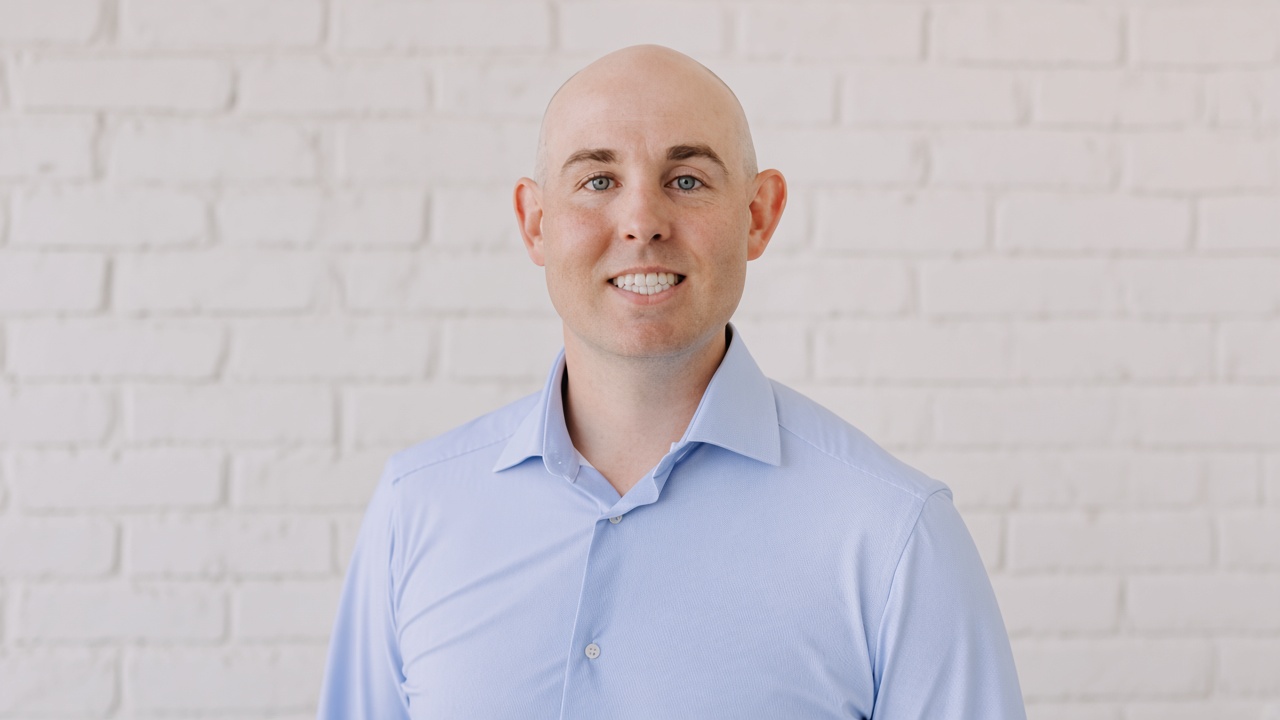
What made you want to do the work you do? Please share the full story.
I grew up poor in rural Utah. The kind of poor where you lie in bed listening to your parents argue about which bills to pay. I watched good people struggle, not because they weren’t smart or didn’t work hard, but because they didn’t have options. I joined the Army at eighteen to escape that, and the Army taught me how the best teams in the world are led.
When I got out and built my own businesses, I hit the same wall every owner hits. I was the bottleneck. Everything ran through me, and I was missing the exact life I’d built the business for. The breakthrough was realizing the Army had already given me the answer. When I stopped operating and started leading the way I’d been trained to lead, the business grew and I got my time back.
That’s what inspires the work now. I believe if I can help someone and I don’t, I’m failing. Every owner I help build a real team creates a ripple. Their employees grow, their families get their mom or dad back, their communities get stronger. It took me over a decade in uniform to learn these systems. My clients get them without paying that price. I get to hand people the thing I wish someone had handed me, and I get to watch them go home for dinner. That never gets old.
Tell us 3 surprisingly easy and 3 surprisingly difficult things about your business.
Three surprisingly easy things about your work.
One, content. People think posting across eight platforms every day requires a massive grind. It doesn’t. I record one long-form conversation a week, my team at Rookery turns it into fifteen plus pieces, and the engine runs. The hard part was building the system. Running it is easy.
Two, hard conversations. Telling a client his real problem is himself, telling a team member something didn’t work. Most people dread that. For me candor is the default, and it turns out people are relieved when someone finally says the true thing. The truth delivered with respect builds trust faster than comfort ever does.
Three, juggling multiple roles. Business, Guard, council, coaching, doctorate. People assume that’s chaos. It’s actually simple, because everything runs on the same battle rhythm. Mission brief, execution, AAR. When every domain uses one operating system, adding a domain doesn’t add complexity. It just adds another place the system works.
Three difficult things about your work.
One, taking my own medicine. I teach owners to let go, and the operator’s pull never fully dies in me either. When something matters, my hands still want the wheel. Staying out of my team’s lane takes real discipline, because every time I save the day I’m training them to wait for me. The hardest client I coach is me.
Two, patience with the compound. I believe in moving the needle every day, but the needle moves slow before it moves fast. Watching incremental gains stack while other guys chase flashy home runs takes conviction, especially in the seasons where the scoreboard doesn’t move for months.
Three, the ones who won’t take ownership. I can teach systems to anyone who owns their outcomes. I can’t help someone who’s committed to being a victim of their circumstances, and walking away from a person you can see the potential in is genuinely hard. You can hand someone the playbook. You can’t run it for them. Learning to let people choos
What are the 3 things you like best about your work and why?
Three things you like best about your work.
First, watching people transform. There’s a moment when a client stops being the bottleneck, when his team starts running on judgment instead of his hands, and he tells me he took a vacation and nothing broke. Or he made it to every one of his kid’s games this season. That’s the whole reason I do this. I spent over a decade learning these systems the hard way, and handing them to someone who gets the result without paying that price never gets old.
Second, the conversations. Between the Based Business Podcast, the Commanders Club, and the studio, I spend my week talking with sharp people about real problems. Every conversation feeds something else. A lesson from football practice shows up in a coaching call. Something from the Guard shows up in a client’s org chart. My work lets me cross-pollinate constantly, and that keeps me learning.
Third, the freedom. Not beach freedom. The freedom to build what I believe in, structure my day around my family, and never ask permission. I watched my parents feel powerless growing up. Every day I work on my own terms is proof that the escape worked.
What are your greatest 3 skills and how have they helped you succeed?
The first is serenity under pressure. It’s not that I don’t care, and it’s not that I don’t feel it. It’s that emotion doesn’t stop me from thinking. The Army built that in me. When circumstances get chaotic, adversarial, or high stakes, I can keep processing, and that matters more than people realize, because leaders transmit their emotional state. If I stay calm, my team stays calm. If I spiral, they spiral. That steadiness is what got me through two years of working for free with a baby on the way, and it’s what lets me handle conflict, money problems, and criticism without becoming reactive.
The second is objective detachment. Not indifference, I care deeply about outcomes. Detachment means I can separate what I want to be true from what the evidence says is true. I can step outside my own ego, my own prior positions, even my own emotions, and ask what’s actually happening here. What are the facts. What’s the desired end state. It’s why the after action review works for me. I can look at something I built and poured myself into and say plainly that it didn’t work. It’s what let me kill my first business idea fast and pivot without drama. Most owners can’t do that because their identity is welded to their decisions.
The third is leadership through ontological humility, which is a fancy phrase for a simple posture. I don’t need to have every answer. I need to create the environment where we find the best answer and execute it. So I ask questions. I bring in people who know more than I do in their domain. I give them intent and boundaries instead of instructions, and then I stay accountable for the outcome. And the other half of that skill is development. I don’t hunt for perfect A players. I find capable people with the right character and build them into A players. That’s the common thread through my Army career, my football coaching, and every business I’ve run. It’s the difference between a company that runs on my hands and one that runs on shared judgment.
Tell us about a time you were dead wrong about something.
I made two expensive mistakes that taught me the same lesson.
The first was buying a big-name CRM without clearly defining what I actually needed. I trusted the brand, signed a large contract, and ended up spending tens of thousands of dollars on something that did not work for the business. I skipped the process I would have followed anywhere else: define the mission before choosing the equipment.
The second mistake was outsourcing work that was actually inside my zone of genius. I paid someone else to handle something I could do very well myself, and the result was worse and made the event unprofitable. I learned that delegation should free me from work others can do so I can focus more on the work only I can do.
I handled both mistakes the same way. I looked at what happened, why it happened, and what needed to change without making excuses or turning a bad decision into something personal.
Now, before any major spend, I ask myself what I am paying for, why I am paying for it, and whether the work is inside or outside my zone of genius. If it is outside, I delegate it but define the end result clearly. If it is inside, I protect it. These were expensive lessons, but they are now part of how I make decisions.
How do you get yourself out of a funk? Please share the details.
Getting out of a funk is the same principle, plus one more tool. Pattern interrupts. I’ve learned my mind follows my body, so when I’m stuck mentally, I create a physical disconnect I can key on. Usually that’s a hard gym session, the kind where the only thing I can think about is the next rep. Sometimes it’s PNF stretching or a chiropractic appointment, something that physically resets the system. The point is the interrupt itself. It breaks the loop I’ve been running and gives my mind a clean line to restart from.
And when the funk is deeper than a bad day, my family pulls me out. Lapses in discipline or motivation don’t survive long when I look at my kids, because they’re the why behind all of it, and they’re watching how their dad handles hard things. So I don’t wait to feel motivated. I run the process. Step back, get informed, break the pattern, move the needle on one small thing today.
What is a habit you try to stick to and how has it helped you?
The after action review. It’s the highest leverage habit I took from the Army.
Every week, and after every event, launch, or drill, my team and I ask the same three questions. What worked. What didn’t. What do we change. No blame, no ego, no spin. Just an honest look at the gap between what we planned and what actually happened.
It sounds simple, but most people never do it. They finish something, feel good or bad about it, and sprint to the next thing carrying the same mistakes. The AAR forces the lesson out of the experience while it’s still fresh. It’s the difference between ten years of experience and one year of experience repeated ten times.
It works because it compounds. One review doesn’t change much. Fifty-two of them a year changes everything. It’s also how I get my team thinking like owners instead of waiting on me. When the guy who did the work is the one telling you what to fix, you don’t need to micromanage him. The system improves itself.
And I run it on myself too. My workouts, my faith, my marriage, my time with my kids. Am I better than I was last week, and if not, what changes. Constant improvement isn’t a poster on the wall. It’s a meeting you actually hold.
How do you celebrate your victories?
I make a point to celebrate even the small ones, and it always starts with my wife, Emmeline.
She carried our household on a teacher’s salary while I worked two years for free building the first business. Every win we’ve ever had is a shared win, so celebrating without her wouldn’t make sense. For the small victories, it’s beautifully simple. A bowl of ramen and some Naruto on the couch. That’s it. That’s the celebration. And honestly, those might be my favorite ones.
For the bigger victories, we make it an event. A nice dinner out, or time with friends, something that marks the moment properly. The point is that we actually stop and mark it. I preach constant improvement, and the shadow side of that mindset is that you can hit a milestone, feel it for eight seconds, and immediately start chasing the next one. That’s a fast track to a successful business and a joyless life. Celebration is how you tell your brain, and your family, that the work meant something.
It’s also an AAR principle, if I’m being honest. We’re quick to review what went wrong. Wins deserve the same attention.
What is your favorite book and why?
My favorite book is Atlas Shrugged. I know it’s a doorstop, and I know it’s polarizing, but there are so many lessons tucked into that story that are invaluable for anyone in business. It’s been valuable to me on two levels. Philosophically, it makes the case that production, competence, and the people who take responsibility for outcomes are what actually hold the world up, and that you should never apologize for building something excellent. Practically, the story is full of patterns I’ve watched play out in real life. What happens when the competent carry the incompetent indefinitely. What happens when people want the rewards of ownership without the responsibility of it. Who keeps things running when everything gets hard. For a kid who grew up poor watching good people feel powerless, the idea that you can produce your way to freedom, that your mind and your work ethic are assets nobody can take, wasn’t just a philosophy. It was a battle plan.
What advice would you give to your younger self and why?
Two things. Invest in yourself earlier, and find mentors faster.
When I started, I treated investing in myself like a luxury I’d earn later, once the business made money. So I spent two years grinding alone, working for free, trying to figure out everything through trial and error. Some of that struggle built me, and I don’t regret the work ethic it forged. But a lot of those problems had already been solved by somebody else. I just didn’t know it, because I wasn’t in the rooms where those people were.
The proof came later. Since then I’ve invested well over a hundred grand into coaching, masterminds, and mentorship, and every dollar came back multiplied. Not because the information was magic, but because a mentor who’s already been through the wall can walk you around it in a conversation. What took me two years of grinding, the right mentor could have compressed into two months. In the Army nobody expects a private to figure out war on his own. You get NCOs, training, doctrine, a whole system of people pouring into you. Then we get into business and try to be self-made. That’s just slow learning with extra ego.
I actually got a taste of it early and didn’t fully appreciate it. My first mentors were the guys at the warehouse where I worked for ten dollars an hour. They saw my work ethic, offered to help me start my business, and let me use their equipment after hours. That generosity changed my trajectory. Younger me should have taken the lesson and gone looking for more of that, immediately and relentlessly.
So the advice is simple. Your business can’t outgrow you, so you are the investment. Pay to be in rooms with people ahead of you. Ask for help before you think you’ve earned the right to. The tuition for a mentor is always cheaper than the tuition for a mistake.
Who has been your biggest mentor in life (personal or professional) and how have they helped you?
I honestly can’t narrow it to one, and I think that’s the real answer. Nobody builds anything worthwhile off a single mentor. You build off a chain of them.
On the military side, Staff Sergeant Retired Kelvin Gray shaped me early in my active duty career. He drilled into me that a leader exudes maximum confidence, that your self-confidence is what inspires your subordinates, and that you should always work to be the best at what you do. Confidence isn’t arrogance. It’s a gift you give your team, because they borrow their certainty from yours. Since joining the Utah National Guard, I’ve had mentors like Major Rich Willey and Lieutenant Colonel Chamberlain Neff. What made them different is that they didn’t just expect greatness from me, they put in their own work to help me achieve it. They set the standard high and then climbed alongside me. That’s the model I now try to be for my soldiers and my clients.
On the business side, I’ve been blessed to learn from people operating at the highest level. Russell Brunson, Tanner Chidester, Akbar Sheikh. And here’s the part I’d point your readers to. Some of my businesses have rivaled or exceeded some of theirs, and I still pay to learn from them. Because mentorship was never about finding someone bigger than you. It’s about perspective. They operate in different markets, see different patterns, and what’s working in their world can be adapted to mine. The day you think you’ve outgrown mentors is the day you start shrinking.
The common thread across all of them is that every one saw more in me than I’d proven yet, and expected me to close the gap. That’s what a real mentor does. And it’s why I take developing my own people so seriously.
Just for fun, what is your favorite food?
Chinese food in general, but my true love is ramen. If I had to name one specific bowl, it’s a tonkatsu or katsu chicken ramen with a spicy garlic miso broth. Crispy katsu, rich broth, enough garlic to keep people at a respectful distance. I take my ramen seriously. The Army sent me all over the world, and of everything I ate along the way, that’s the bowl I keep coming back to.