
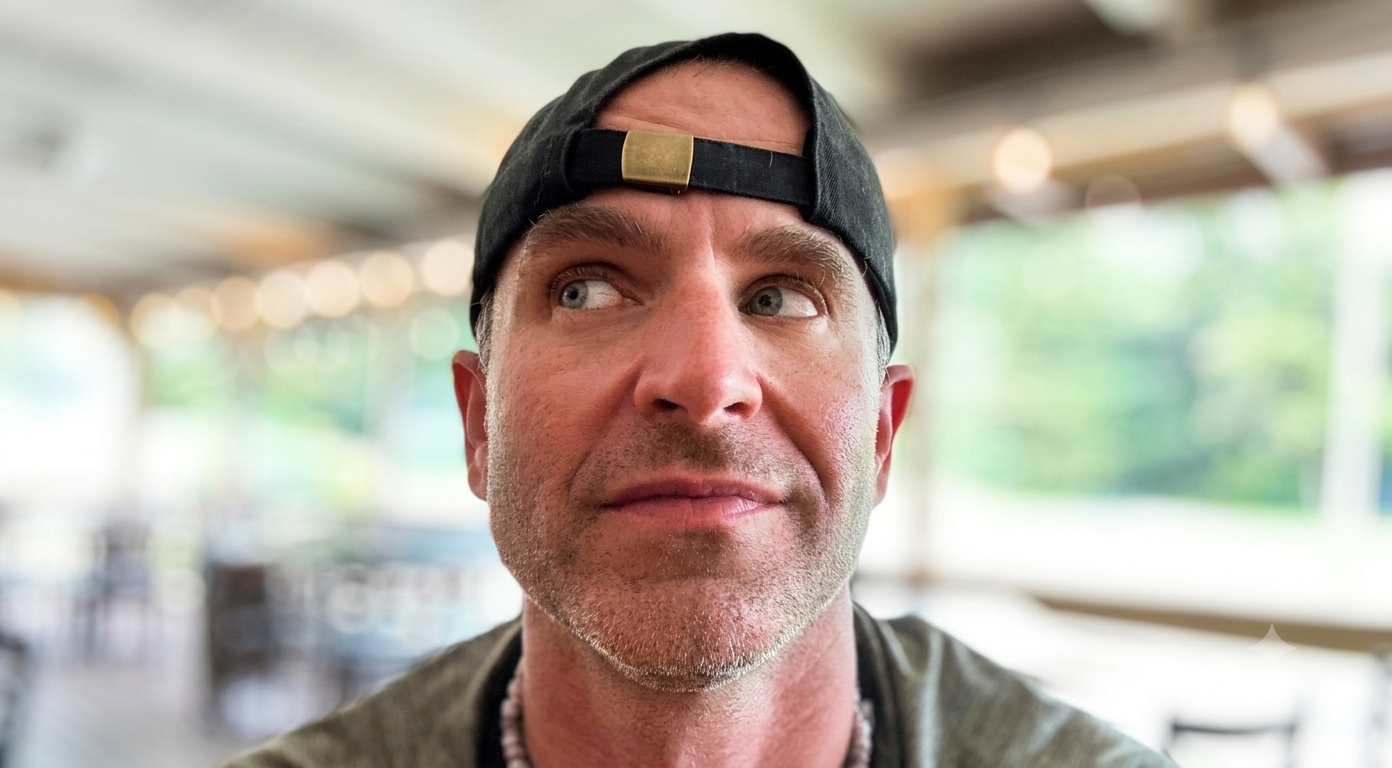
What made you want to do the work you do? Please share the full story.
I think I became a chiropractor because, without realizing it at the time, I took the things that fascinated me as a child and eventually figured out how to turn them into a career. I knew from an incredibly young age that I wanted to be a doctor. I can still remember being about six years old and having a pediatrician treat me with such kindness and compassion that I became fascinated by the idea that somebody could spend their life helping other people feel better. Something about that experience stayed with me, and I remember thinking that I wanted to help people the way he had helped me. As I got older,
I discovered another huge part of who I was. I was extremely physical. I loved exercising, working out, staying healthy, understanding the body, and doing things with my hands. I liked movement and creativity much more than sitting still, and I realized that whatever I ultimately did needed to involve those parts of me.
Then I discovered chiropractic, a profession that I honestly barely knew existed, and suddenly these seemingly separate childhood interests fit together perfectly. I could be a doctor, help people, study the human body, work with my hands, stay connected to health and physicality, solve problems, and interact with people all day. I had essentially stumbled into a profession that blended the things I naturally loved before I even knew there was a career that could combine them.
Looking back, I think there is something powerful about maintaining those childlike interests and curiosities instead of growing out of them. Sometimes they are telling you something about who you actually are. After all these years, I still rarely feel like I am going to work. I walk into a room, meet another human being, listen to them, connect with them, laugh with them, use my hands and experience to try to help them, and hopefully leave them a little better than when they walked in. In many ways, the six year old version of me already knew what he wanted to do with his
Tell us 3 surprisingly easy and 3 surprisingly difficult things about your business.
The three surprisingly easy things for me have been connecting with people, working with my hands, and being honest enough to meet people exactly where they are. Connecting with people has always been natural because I am genuinely curious about them. I like hearing their stories and understanding the person rather than simply identifying a diagnosis. Working with my hands is equally natural and puts me into a flow state where experience, intuition, movement, anatomy, and problem solving seem to come together. Being honest with patients also comes naturally because I have never believed that my job is to force someone toward an outcome I have chosen for them. My job is to understand where they are and help them get where they want to go. The difficult things have almost all involved learning to wear the other hats that come with owning and operating a healthcare business. Being a doctor is one hat, but suddenly you are also an employer, administrator, financial decision maker, planner, leader, and strategist. Some of those roles did not come naturally to me at all. Planning years into the future can be particularly challenging when your personality naturally draws you toward being deeply engaged with the human being standing directly in front of you. The other major challenge has been learning how to balance ambition with family and life. When I was younger, I was constantly striving toward the next goal until I eventually realized there was no magical destination waiting for me. The goal was already happening. It was continuing to grow professionally while simultaneously becoming a better husband, father, friend, and human being.
What are the 3 things you like best about your work and why?
The three things I love most about my work are connecting with people, working with my hands and solving problems, and watching people reclaim parts of their lives. Connection probably comes first because relating to people feels extremely natural to me, and healthcare gives you the privilege of meeting people during moments when they may not be at their best. They may be injured, frustrated, frightened, uncomfortable, or simply exhausted from not feeling like themselves. I enjoy being able to meet somebody in that moment and genuinely listen rather than immediately trying to force them into some predetermined treatment plan. The second thing I love is the physical and creative nature of chiropractic. Working with my hands puts me into a genuine flow state. I get to combine anatomy, movement, clinical reasoning, experience, intuition, and touch, and sometimes you can immediately see a difference in the way somebody moves or feels. The third thing is watching someone regain something that pain or injury had taken away from them. That might mean returning to work, getting back into the gym, sleeping normally, playing with their children, or simply making it through the day without constantly thinking about their body. Those victories remind me why I chose this profession. At its best, my job does not feel transactional at all. It feels like two human beings connecting, figuring something out together, and hopefully both leaving the interaction better than when it began.
What do you think are your 3 biggest weaknesses and how are you overcoming them?
My three biggest weaknesses are probably taking on too much myself, moving too quickly, and occasionally neglecting the things that keep me grounded when life becomes busy. My natural instinct has always been that I will figure something out myself, and that quality has served me incredibly well, but there is a difference between challenging yourself and unnecessarily carrying everything yourself. I have had to learn when to ask for help, when to look deeper within myself for an answer, and when the smartest thing I can possibly do is delegate something to somebody who can do it better. My mind also moves extremely quickly. I think quickly, speak quickly, and naturally want to solve problems quickly. One of the most important lessons I have learned is that hearing someone and actively listening to someone are entirely different things. Active listening was difficult for me initially because it requires slowing down enough to understand rather than simply preparing your response. I now believe listening may be one of the greatest gifts one person can give another. Finally, I have learned that grounding has to be practiced consistently. Exercise, sleep, reflection, meditation, relationships, reading, and taking care of yourself cannot always be the first things sacrificed when life gets busy. You can have an incredible amount of money in the bank, but if your physical health, emotional well being, or relationships are deteriorating, then you have to ask yourself how successful you actually are. Balance is not something you achieve once. It is something you continually practice.
Tell us about a time where you saw a surprising outcome that you did not expect.
One of the most important things my career has taught me is how often we prejudge situations based on a narrative that may no longer even be true. In healthcare you can look at an MRI, a diagnosis, or somebody’s history and unconsciously decide what their future is going to look like, only to have that person completely surprise you. The same thing happens with people, relationships, businesses, and life itself. We create narratives and then sometimes forget to ask whether those narratives have expired. I have learned that curiosity is one of the best antidotes to that kind of thinking. Instead of automatically saying, I know what this is, I try to ask what else it could be or what could happen that I have not considered. There is something wonderfully childlike about curiosity. Children have not accumulated enough old narratives to automatically explain why something cannot happen, so they naturally imagine what could happen. I think adulthood sometimes teaches us to replace imagination with prediction, when perhaps what we really need is to retain our experience while recovering some of that youthful creativity. Staying curious allows you to look at an old situation through new eyes and remain open to an outcome that might be completely different and far better than the one you had already decided was inevitable.
What is the biggest challenge you face each day and how do you handle it?
The biggest challenge I face each day is remembering that happiness and curiosity are choices, particularly when life gives you a very convincing reason to choose something else. Of course I have all the practical challenges of everyday life. On any given day I can be a doctor, business owner, employer, husband, father, friend, administrator, and problem solver, sometimes all before dinner. But underneath all of those roles is a more important question about how I am actually choosing to experience my life. It is incredibly easy to turn life into a sequence of ordinary moments that you simply need to get through. Another drive, another patient, another meeting, another disagreement, another responsibility, another problem. The reality is that we only get so many moments. When I find myself becoming frustrated, falling into a funk, or treating the present moment as an inconvenience standing between me and something better, I try to remind myself of a simple idea: there are no ordinary moments. The difficult moments count. The mundane moments count. The five minute conversation with your child counts. The conversation with your spouse when you are tired counts. Even the struggle counts. I do not always succeed at living this way, but I continually try to return to curiosity instead of judgment, gratitude instead of resentment, and presence instead of simply trying to get through the day. When you truly understand that your moments are finite, even an imperfect moment becomes incredibly valuable.
What is a habit you try to stick to and how has it helped you?
I have realized that my most important habit is not really one specific activity but continually returning to the things that ground me. Exercise is a huge part of that because physical activity clears my head, releases stress, keeps me strong, and forces me back into the present moment, but meditation, reading, reflection, and having a genuinely heartfelt conversation with somebody I love can accomplish something equally important. Sometimes the habit I need is simply being willing to say that I am sorry. Sometimes it is resisting the temptation to write somebody off as insensitive or difficult simply because they hurt me. Sometimes it is recognizing that almost every relationship is a two way street and having enough self awareness to ask what part of the situation belongs to me. I have learned that maintaining control over yourself does not mean getting the last word, proving that you are right, or walking away from every disagreement feeling justified. Sometimes the strongest thing you can do is surrender your need to win. Exercise your body, challenge your mind, read, meditate, apologize when you are wrong, forgive when you can, talk deeply with the people you love, and occasionally remind yourself how remarkable it is simply to be alive. Those are the habits that continually bring me back to myself.
What achievement are you the proudest of and why?
The achievement I am most proud of is building my family and having the privilege of watching them grow and thrive. I am proud of my career, the businesses I have helped build, the risks I have taken, and the financial security I have worked hard to create, but as I have gotten older my definition of achievement has changed dramatically. I have realized that there is an important relationship between working hard at your profession and working even harder at the relationships with the people you love because ultimately love, connection, and happiness trump almost every other measure of success. I have also realized that happiness is not created by controlling life. Oddly enough, part of happiness comes from accepting how little control we actually have. Anything can happen. Life can change instantly. What we have much greater influence over is what we create from whatever happens next. I want to live in a continuing state of gratitude and happiness, not by pretending everything is wonderful when it is not, but by knowing that I can get knocked down, get back up, continue loving passionately, continue creating, continue laughing, and continue appreciating my existence. More than anything, I want my children to understand that they are creators and architects of their own lives. They cannot control everything that happens to them, but they can continually decide what they build from it. If my family thrives, if we deeply love one another, if I remain grateful for the life I have been given, and if my children learn that they can continue creating something beautiful even when circumstances are imperfect, that will mean infinitely more to me than anything I could ever put on a résumé.
What is your favorite book and why?
One book that has made me think deeply is No More Mr. Nice Guy by Robert Glover, not because I necessarily agree with every sentence in it, but because I think the best books are not always the ones that give you answers. Sometimes the best books force you to ask uncomfortable questions about yourself. What resonated with me was the idea of taking responsibility for your own life, communicating what you actually want, creating healthy boundaries, and recognizing how easily we can begin constructing parts of ourselves around gaining approval from other people. It made me examine how I communicate, how I show up in relationships, why I sometimes respond the way I do, and what it actually means to take responsibility for my own happiness rather than expecting another person to create it for me. I appreciate books that disrupt an existing narrative enough to make you curious about yourself again. Ultimately, I do not think self awareness is reaching a point where you decide you have finally figured yourself out. It is maintaining enough curiosity to continue discovering parts of yourself that you still do not completely understand.
What advice would you give to your younger self and why?
I would tell my younger self to stop believing there is a finish line. When you are young and ambitious, it is incredibly easy to turn life into a series of destinations. Finish school, establish the career, build the business, make the money, buy the house, reach the next level, and then somehow you imagine you will have arrived. There is absolutely nothing wrong with ambition, and I would still tell myself to work incredibly hard, take risks, trust my instincts, fail spectacularly sometimes, and never be embarrassed by failure, but I would also tell myself that life is happening while you are busy trying to arrive somewhere else. I love the idea that it is easy to be a Buddha peacefully sitting at the top of a mountain, but it is much harder to be a Buddha in the middle of the struggle. (Courtesy of my wife) Can you remain grounded when you are exhausted? Can you remain loving when you are angry? Can you remain curious when you are absolutely convinced that you are right? Can you recognize something extraordinary inside a moment that initially appears completely ordinary? Your children are only children once, your health is never guaranteed, relationships require attention, and there will always be another email, another patient, another business problem, and another opportunity to make money tomorrow. If I could give my younger self one message, it would simply be to remember that nothing is ordinary. Once you truly understand that, you stop waiting for extraordinary things to happen to you and start recognizing how extraordinary it already is simply to be here.
Who has been your biggest mentor in life (personal or professional) and how have they helped you?
My wife, without a shadow of a doubt, has been my greatest mentor. We are opposites in many ways, and ironically I think that is exactly why she has taught me so much. She has challenged some of my weakest areas simply by being naturally strong in places where I struggle. I can be incredibly creative, spontaneous, ambitious, and capable of seeing possibilities everywhere, but creativity and ambition without structure can remain nothing more than a collection of interesting ideas. She has taught me the power of dedication, focus, organization, consistency, and creating a framework through which ideas can actually become reality. She has challenged me, frustrated me, made me examine myself when I did not necessarily want to, and she can absolutely still drive me crazy, which I think is a natural part of truly loving another human being for a long time. Underneath all of that, however, is an enormous amount of love and gratitude. She is one of the most wonderful people I have encountered in this existence, and understanding myself through the experience of loving someone who is so different from me has helped me become a much better version of myself. I think the greatest mentors are not necessarily the people who make your life easier. Sometimes they are the people who continually reveal the places where you still have room to grow, and nobody has done that for me more profoundly than my wife.
Just for fun, what is your favorite ice cream flavor?
My favorite ice cream is without question chocolate chip with cookie dough because apparently when those two things are put together whatever discipline and self control I claim to possess immediately disappears. My favorite food is Italian, almost every time. Give me great pasta, fresh bread, enough garlic to make everyone around me uncomfortable, and I am generally a very happy person. As far as dessert goes, I only need one word: cannoli!!! There is no life lesson here, no deeper philosophical meaning, no discussion about personal growth or becoming the architect of your existence. Just give me the cannoli… and after consumption comes gratitude!!