
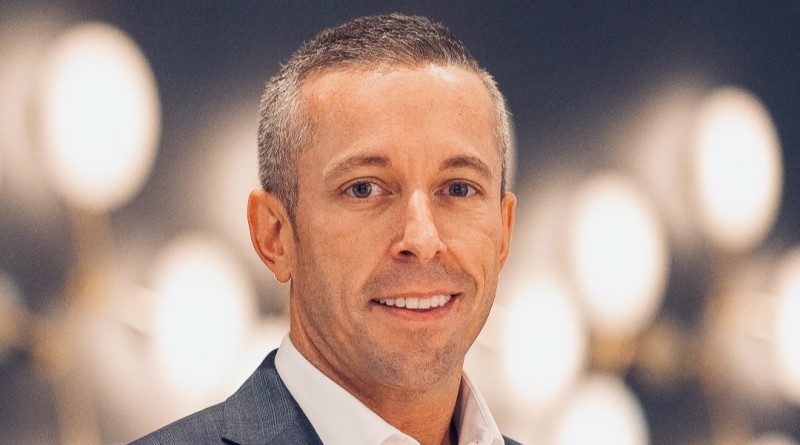
What made you want to do the work you do? Please share the full story.
I came into hospitality from the ground up. While I was still enlisted in the U.S. Navy, I obtained permission to work a second job at the front desk of a hotel in Jacksonville Beach, Florida, while also taking online college classes. After leaving the Navy, I moved to Las Vegas and joined Wynn Las Vegas, where I worked my way through hotel operations and revenue management while attending UNLV full time.
The turning point in my career came later at Vegas.com, where I served as General Manager of the LasVegas.com line of business. That role gave me a front-row seat to executive decision making and exposed me to two very different ways of thinking about business. I found myself naturally approaching problems through the commercial lens, but I also saw how valuable the legal perspective was in shaping strategy. That experience ultimately led me to attend law school because I believed it would make me a more complete business leader.
Since then, my career has allowed me to operate at the intersection of hospitality, technology, legal, and commercial leadership. What attracted me to Rest was the opportunity to apply that background to a problem I knew hotels had struggled with for decades. Hotels have always had smoking policies. What they lacked was a consistent, objective way to identify violations, document them, and enforce those policies fairly. Helping solve that operational challenge while building an entirely new category within hospitality technology made the opportunity incredibly compelling.
Tell us 3 surprisingly easy and 3 surprisingly difficult things about your job.
Three things that are surprisingly easy are recognizing when a problem is real, understanding why operators care about it, and helping customers see that a long-accepted problem can actually be solved. Hotels do not need to be convinced that smoking in guest rooms creates operational challenges. They live with those challenges every day. The opportunity is showing them there is a better way to manage them.
The surprisingly difficult parts are timing, focus, and alignment. Timing is difficult because markets do not always move as quickly as technology. Focus is difficult because there are always more opportunities than any company can realistically pursue. Alignment may be the hardest of all because success requires engineering, sales, marketing, customer success, and hotel operations to stay coordinated around the same objective.
Much of my role at Rest is making sure everyone is solving the same problem, even if they are approaching it from different perspectives. When that happens well execution becomes much easier.
What are the 3 things you like best about your work and why?
The first is solving real operational problems. I have always enjoyed work that produces tangible results, and hospitality is an industry where even small improvements can have a meaningful impact on the guest experience, employee experience, and financial performance.
The second is spending time with hotel operators. Some of the best ideas I have encountered did not come from conference rooms. They came from conversations with general managers, front desk teams, and owners who deal with these challenges every day. Staying close to customers keeps the work grounded in reality.
The third is helping build a category that did not previously exist. Most companies spend their time competing within established markets. At Rest, we have the opportunity to help define an entirely new approach to how hotels manage smoking policy enforcement. That requires more than good technology. It requires education, trust, and helping an industry rethink what is possible. Being part of that process has been one of the most rewarding experiences of my career.
What are your greatest 3 skills and how have they helped you succeed?
The first is continuous learning. Every meaningful step in my career required learning something completely new, from hotel operations and revenue management to law, technology, and commercial leadership. I have found that being willing to learn often creates opportunities that experience alone cannot.
The second is the ability to translate between different disciplines. Much of my career has been spent sitting between legal, commercial, operational, and executive teams. Those groups often approach the same issue from different perspectives. Helping them communicate effectively and align around a common objective has been one of the most valuable skills I have developed.
The third is judgment. I do not mean always having the right answer. I mean, knowing when to move quickly, when to slow down, and when more information is worth gathering before making an important decision. In hospitality technology and at Rest, where customer operations, product development, legal considerations, and commercial strategy all intersect, thoughtful judgment has been one of the biggest contributors to my success.
Tell us about a time where you saw a surprising outcome that you did not expect.
One of the more surprising things I have experienced was how quickly hotel operators changed their perspective once they had objective data. Before Rest, many hotels simply accepted in room smoking as an unfortunate reality that was difficult to enforce consistently. They knew it was happening, but without reliable documentation, many violations went unnoticed or became difficult conversations with guests.
What surprised me was how quickly that changed once operators had a consistent way to identify and document smoking events. The conversation shifted from whether the problem existed to how they could improve their operational process around it. It reinforced something I have seen throughout my career: people are often willing to embrace change much faster than you expect once they have confidence in the information they are using to make decisions.
What is the biggest challenge you face each day and how do you handle it?
The biggest challenge is balancing urgency with discipline. In hospitality technology, there is always pressure to move quickly because the market is shifting, guest expectations are rising, and new opportunities appear constantly. At the same time, the work only holds up if it is grounded, useful, and credible.
I handle that by staying close to operators and trying to keep the signal clearer than the noise. At Rest, that means coming back to a simple question over and over again: does this help hotel teams make better decisions and maintain better standards in the real world? If the answer is yes, it is usually worth prioritizing.
What is a habit you try to stick to and how has it helped you?
I try to stay very close to primary information. That means reading directly, listening carefully, and not relying too heavily on summaries when I can get to the source itself. In my experience, whether you are looking at a regulation, a customer conversation, or a product issue, the details matter more than people think.
That habit has helped me a great deal at Rest because our category sits at the intersection of operations, regulation, technology, and guest expectations. When you work in a space like that, secondhand interpretation can create confusion quickly. I have found that the closer I stay to the source, the better my decisions tend to be.
What achievement are you the proudest of and why?
More than any individual title or accomplishment, I am proud of having built a career by continuously expanding my perspective. I started at the front desk of a hotel while serving in the Navy, worked my way through hotel operations and revenue management, chose to attend law school to become a more well-rounded business leader, and eventually had the opportunity to lead both legal and commercial organizations.
Today, I have the privilege of helping build an entirely new category within hospitality technology at Rest. Being part of that journey has been incredibly rewarding because we are not simply introducing another product into an existing market. We are helping hotels rethink how they address a long-standing operational challenge. Knowing that our work helps operators protect their assets, support their teams, and create a better experience for future guests is something I am genuinely proud to be part of.
What is your favorite book and why?
I don’t know that I have a single favorite book. After law school, I probably reached my lifetime quota of reading for a while. These days, I tend to gravitate toward practical books that help me become better at what I do, whether that’s becoming a stronger leader, a better communicator, or thinking differently about business and sales. I enjoy books that give me ideas I can apply immediately to my work at Rest, more than books I simply read for entertainment.
What advice would you give to your younger self and why?
I would tell my younger self to worry less about having a perfect linear story. Early on, I spent a lot of time wondering whether I would eventually need to choose between being more legal, more commercial, more operational, or more technical. What I learned is that the combination became the advantage.
I would also remind myself that meaningful careers are built over decades, not quarters. It is easy to become impatient when you are early in your career and eager to prove yourself, but most worthwhile opportunities take far longer to develop than you expect. Stay curious, continue learning, and do good work consistently. Those things compound over time in ways you cannot always see in the moment.
Who has been your biggest mentor in life (personal or professional) and how have they helped you?
I have been fortunate to learn from a number of leaders throughout my career rather than having one defining mentor. One experience that had a lasting impact on me was my time at Vegas.com, where I had the opportunity to observe a CEO with a strong commercial mindset alongside a chairman who approached many of the same business challenges through a legal lens. Watching them evaluate the same issues from two very different perspectives changed how I thought about business. Ultimately, that experience led me to attend law school because I recognized that understanding both perspectives would make me a more effective business leader.
Since then, I have tried to learn something from every leader I have worked with. The best ones shared a common trait. They combined high standards with intellectual honesty, encouraged healthy debate, and cared more about making the right decision than proving they were right.
Just for fun, what is your favorite food?
I’m originally from Maryland, so it’s hard to beat blue crabs and just about any kind of seafood. Beyond the fact that I genuinely love it, seafood has a nostalgic quality for me because it reminds me of growing up and spending time with family.