
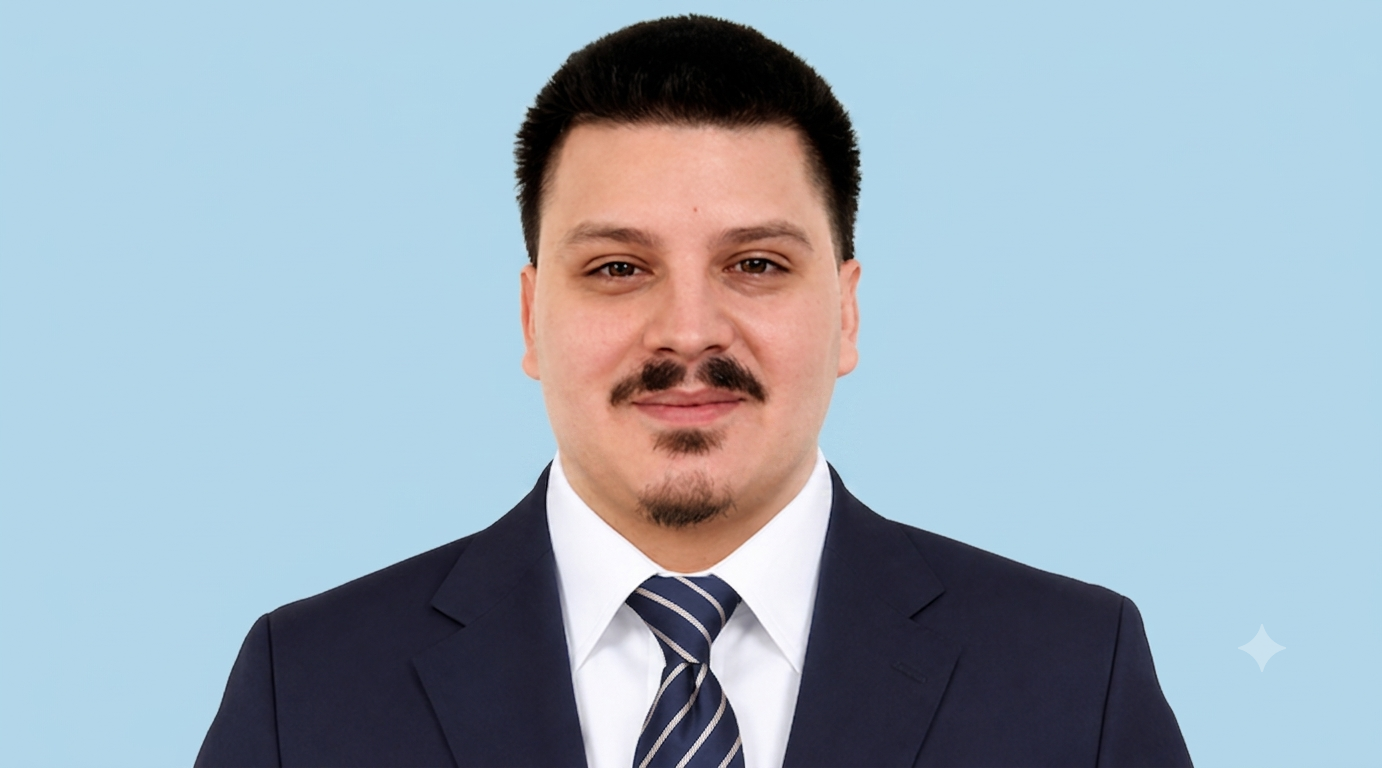
What made you want to do the work you do? Please share the full story.
Operations found me before I fully understood what it meant. I was early in my career, working warehouse floors and learning how product actually moves from receiving dock to outbound shipment and something about that process clicked for me. There was a logic to it. Every inefficiency had a root cause and every root cause had a fix. That problem-solving pull kept me going further into the work, from my time as a Warehouse Supervisor at STAUBER to an Operations Manager position at Lineage, where the scale and demands of the work pushed me to build better systems faster.
Burning Daily gave me something I hadn’t had before in my career. The hemp-derived cannabinoid space was growing fast, the regulatory space was demanding and the operational infrastructure needed to carry that growth simply wasn’t there yet. That gap was exactly the kind of problem I had spent eight years preparing to solve. I stepped in as Director of Operations and got to work building the SOPs, inventory controls and fulfillment processes that the business needed to scale with consistency. Knowing that the systems I put in place protect both the business and the customers we serve every day is what keeps me motivated to show up and do this work right.
Tell us 3 surprisingly easy and 3 surprisingly difficult things about your business.
Getting buy-in on SOPs turned out to be far easier than I expected once I led with data. Most people assume that rolling out new standard operating procedures means a long internal battle, but when you show your team a before-and-after on fulfillment accuracy or shrinkage rates, the resistance drops fast. Building supplier relationships that actually save money was also easier than anticipated, because vendors want long-term, reliable partners and volume history combined with on-time payments opens doors to better terms quickly. Reducing picking errors through simple bin location discipline surprised me too, because what looked like a people problem was really a layout and labeling problem the entire time. Once we treated it that way, accuracy improved without adding headcount or retraining the entire floor.
The difficult side of the business never fully goes away, no matter how strong the systems are. Maintaining inventory accuracy across a high-SKU, regulated product catalog is a daily discipline that compounds in difficulty every time we add a new product, because hemp-derived goods carry lot tracking and chain-of-custody requirements that most e-commerce warehouses never deal with. Scaling labor without scaling errors is the second hard thing, because training takes time and the floor doesn’t slow down while someone is learning. Keeping cross-department communication clean as the business grows is the third, because sales, compliance and logistics all operate on different timelines and aligning all three around inventory levels and fulfillment capacity requires constant, deliberate effort. It gets harder, not easier, as we add channels and products.
What are the 3 things you like best about your work and why?
The part of my work I enjoy most is watching a system I built actually hold up under pressure. Early-stage operations are messy and getting them organized takes real effort, but the moment a new SOP reduces errors and the floor runs cleaner without anyone having to micromanage it, that feeling is hard to match. I spent years at STAUBER and Lineage learning how to spot the difference between a process that looks good on paper and one that actually performs under real warehouse conditions. That experience gave me a standard I hold every system I build at Burning Daily to and hitting that standard consistently is genuinely satisfying. Watching the floor perform at that level is something I never take for granted.
The second thing I love about this work is that it sits at the intersection of compliance and execution. Most operations roles don’t carry the regulatory weight that comes with hemp-derived products and that added layer of responsibility pushes me to be more precise than I might otherwise need to be. Lot tracking, chain-of-custody documentation and SKU-level accuracy are not optional in this industry and building a team that treats them as normal operating standards rather than burdensome requirements is something I take real pride in. The third thing is simpler. Seeing order accuracy lift, shrinkage drop and fulfillment speed increase because of decisions I made months earlier tells me the work is adding up in the right direction.
What are the three things you need in work to achieve purpose? Why are they important to you?
The first thing I need in my work to feel like I’m doing something worthwhile is a clear standard to measure against. Without defined KPIs, fulfillment targets and accuracy benchmarks, the work becomes reactive and reactive operations don’t grow, they just survive. I spent years building that measurement discipline at Lineage and STAUBER and I brought that same standard to Burning Daily because I believe you cannot fix what you don’t track. Knowing exactly where the operation stands on any given day gives me the clarity I need to make good decisions and hold the team accountable to outcomes that matter. That ownership loop is what separates a warehouse that functions from one that actually performs.
The second thing I need is a problem worth solving. Hemp-derived cannabinoid distribution sits inside one of the most demanding regulatory spaces in consumer goods right now and that pressure demands real operational discipline rather than guesswork. Knowing that the systems I build protect customers, keep the business compliant and allow Burning Daily to grow in a responsible way gives the work real weight. The third thing is a team I trust, because no system runs itself and no Director of Operations succeeds without people on the floor who take ownership of their function in the process. Building that culture of reliability at Burning Daily is something I invest in every single day because the operation is only as strong as the people executing it.
Tell us about a time where you saw a surprising outcome that you did not expect.
The most surprising outcome I experienced at Burning Daily came from a warehouse layout overhaul we ran to sharpen pick efficiency. The expectation was that reorganizing bin locations around our highest-velocity SKUs would speed up outbound fulfillment and it did. The reduction in picking errors was something I never saw coming. We were not targeting accuracy as the primary goal of that project, but shrinkage dropped and mis-picks fell by a margin that made the floor team take notice immediately. Sometimes the right structural fix solves two problems at once and that result reminded me that good operational decisions have compounding effects that don’t always show up in the original plan.
That experience changed how I approach every process improvement project since then. I started building secondary measurement points into every initiative so we could capture outcomes we weren’t specifically targeting. That discipline has since helped us spot improvements in areas we were not actively watching, which gives the team more data to work with and more confidence in the decisions we make. The bigger lesson was that operations rewards precision and patience in ways that aren’t always obvious upfront. If you build the right system and give it time to run, it will often outperform the original goal you set for it.
What is the biggest challenge you face each day and how do you handle it?
The biggest challenge I face every day is maintaining inventory accuracy across a regulated, high-SKU product catalog that doesn’t stop moving. Hemp-derived products carry lot tracking and chain-of-custody requirements that add a layer of regulatory weight most e-commerce warehouses never deal with and that weight compounds when order volume spikes or new SKUs get added to the catalog. Every day starts with a reconciliation discipline that has to be exact because a single discrepancy in lot tracking doesn’t just hurt fulfillment accuracy, it creates a compliance exposure that the business cannot afford. I handle it by treating inventory integrity as a non-negotiable operating standard rather than a periodic audit function. The moment you let it slip to a once-a-week check, you are already behind.
The way I manage this on a daily basis is by keeping the team accountable to real-time cycle count protocols rather than relying on end-of-day reconciliation alone. We built SOPs around inbound receiving, bin location discipline and outbound verification that work together as a continuous accuracy loop rather than three separate checkpoints. That structure doesn’t eliminate the challenge but it keeps the exposure window small enough that we catch discrepancies before they become problems. After eight years in warehouse and logistics operations, I know that inventory accuracy is never fully solved, it is only maintained. The discipline of maintaining it every single day is what separates a compliant, scalable operation from one that is always putting out fires.
What is a habit you try to stick to and how has it helped you?
The habit I keep coming back to is starting every day with a floor walk before the operation gets moving. It takes about fifteen minutes and it tells me more about the state of the warehouse than any report I could pull from a screen. I check bin locations, look at inbound staging areas and get a read on how the team is set up for the day before the first order drops. That fifteen minute discipline has saved me from more mid-day surprises than any system I’ve ever built because problems that are visible at 7am are problems you can still fix before they affect the customer. It sounds simple but most operational breakdowns I’ve seen in my career started as something small that nobody caught early enough.
The second discipline I hold to is continuous learning outside of work hours. I stay current on technology and the way new tools are reshaping warehouse operations and I treat that curiosity as part of the job rather than a hobby. Spending time each week reading about automation, inventory management software and new logistics methods keeps me from getting comfortable with the way things are when there may be a better way right around the corner. Operations is not a field that rewards complacency and the leaders I’ve respected most throughout my career at STAUBER and Lineage were the ones who never stopped looking for a smarter way to run the floor. That mindset is something I work to carry into every decision I make at Burning Daily.
What are you doing that is difficult? Please explain.
The hardest thing I’m doing right now is building a leadership bench inside the warehouse that can hold the operation together without me standing over every decision. Most warehouse environments promote their best individual contributors into supervisory roles and then wonder why the floor performance drops and I’ve seen that pattern play out enough times at Lineage and STAUBER to know exactly why it happens. Being great at executing a process and being great at managing people who execute a process are two completely different skill sets. Developing people who understand both sides of that equation takes a level of patience and repetition that doesn’t show up on any KPI report but matters more to long-term operational strength than almost anything else I do. That gap between individual performance and leadership performance is the hardest thing I work on every single day.
The way I approach it is by putting emerging leaders in situations that expose them to the full scope of the operation before they step into a formal position. That means pulling promising team members into cross-functional conversations with the sales team, the compliance team and logistics so they understand how warehouse decisions affect every other part of the business. It also means holding them accountable to the same documentation and SOP standards I hold myself to, because a leader who doesn’t respect the process will never build a team that does. Burning Daily is growing and the operation has to grow with it, which means the people running the floor tomorrow need to be in preparation today. Getting that right is the most difficult and most rewarding work I do at this company.
Who is your favorite motivational speaker and why?
The person whose thinking has influenced me most is Jocko Willink. He is a former Navy SEAL commander turned leadership consultant and author and his philosophy around discipline, ownership and responsibility maps directly onto the way I try to run operations. His core argument is that the leader is always responsible for the outcome, regardless of what the team did or didn’t do and that standard of ownership is something I hold myself to every single day at Burning Daily. Most motivational content I’ve come across focuses on mindset in a way that feels disconnected from the realities of managing a warehouse floor, a compliance requirement or a labor shortage. Jocko’s framework is different because it is built around execution under pressure, which is exactly the setting warehouse and logistics leadership operates in.
The specific idea of his that has stayed with me longest is what he calls Extreme Ownership. The premise is plain. If something goes wrong in your operation, you own it completely rather than distributing blame across the team or the circumstances. I started applying that standard more deliberately after about five years into my career and it changed the way I approached every process failure, every missed fulfillment target and every compliance gap I’ve had to address. It made me a better operator because it forced me to look at root causes rather than symptoms.
If you could go back 2 years and give yourself advice, what would it be?
If I could go back two years and give myself one piece of advice, it would be to build the cycle count protocol before the catalog grows, not after. We expanded our SKU count at Burning Daily faster than our inventory verification process could keep pace with and closing that gap while the operation was already running at full speed was far harder than it needed to be. The honest truth is that I knew the system needed to be tighter earlier than we built it, but the daily pressure of fulfilling orders made it easy to delay a process improvement that felt like it could wait one more week. It never actually waited. It just got more expensive to fix the longer it sat.
The broader lesson I would give myself is to treat infrastructure investment as urgent even when the operation is running well enough to survive without it. Good enough is the enemy of scalable in warehouse operations and the periods where everything feels under control are exactly the right moments to build the systems that protect you when volume spikes or a compliance requirement changes overnight. I spent too much time in those early months at Burning Daily reacting to problems that better SOPs would have prevented entirely. Every week you delay building the right process is a week you are borrowing against future operational stability. I would tell myself to stop borrowing and start building sooner than felt necessary.
Are you willing to be a mentor? If yes, what is the best way to reach you?
Yes, I’m willing to be a mentor and I say that with a specific type of person in mind. If you are early in your warehouse or logistics career and you are serious about building real operational discipline rather than just climbing a title ladder, I’m happy to talk. My career path from Warehouse Supervisor at STAUBER to Operations Manager at Lineage to Director of Operations at Burning Daily was not built on shortcuts or connections. It was built on showing up consistently, learning the floor from the ground up and developing a standard for process and responsibility that I applied everywhere I went. That kind of career is available to more people than realize it and if I can help someone see the path more clearly, that conversation is worth having.
The best way to reach me is through Burning Daily’s website or via LinkedIn. I’m most responsive to people who come with a specific question or a real operational problem they are working through, because that tells me they are already doing the work rather than just looking for general encouragement. Mentorship in operations is most useful when it is practical and grounded in a real situation you are facing right now. I don’t have a formal program or a structured curriculum. My eight years of warehouse and logistics experience across multiple industries and a genuine interest in helping the next generation of operators build careers they are proud of is the only program I run.
Just for fun, what is your favorite dessert?
My favorite dessert is churros. There is something about a simple, well-made churro that I keep coming back to no matter what else is on the menu. Growing up, churros were the kind of treat that showed up at the right moments, outdoor events, family gatherings, days spent outside and that association stuck with me in a way that more elaborate desserts never have. I’m someone who stays active and spends time outdoors, so my idea of a great dessert isn’t something heavy or overly complicated. It fits the same philosophy I bring to operations, the simplest solution that works consistently is almost always the best one.
The thing I appreciate most about churros is that they don’t try to be something they’re not. They are simple, they deliver exactly what they promise and they hold up every single time. I’ve had churros from street vendors in Los Angeles and from sit-down restaurants and the experience is reliably good across the board when they are made with care. There’s a lesson in that for anyone who runs a team or manages a process. Consistency and simplicity done with discipline will outperform careless execution almost every time.