
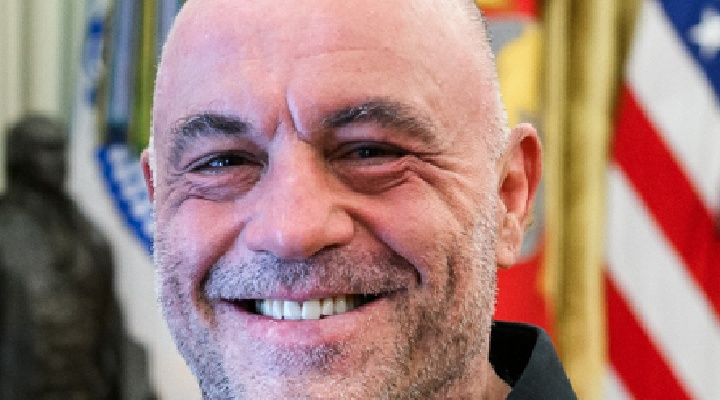
Image Attribution: The White House, Public domain, via Wikimedia Commons
.jpg)
Before Joe Rogan Had the Biggest Podcast in the World, He Had No Idea What He Was Doing
On Christmas Eve 2009, Joe Rogan and Brian Redban turned on a webcam and tried to broadcast themselves on the internet. There was dead air, bad production and no business plan. They decided to come back the next week.
“Start broadcast.”
It is December 24, 2009, and Brian Redban is walking Joe Rogan through the controls.
“Update to Twitter,” Redban says.
Rogan needs to find his Ustream page. Too many windows are open. Redban tells him they are going to kill the internet connection.
“Alright,” Rogan says.
The opening minutes of the first Joe Rogan podcast are full of keyboard clicks and technical problems. Rogan and Redban talk over each other. They watch themselves on a screen. They discover the chat.
There is no producer in a control room waiting to save them. Redban is the producer, and he is sitting beside Rogan trying to figure it out too.
Two hours later, they have another problem.
How do they end the thing?
“Do we save this?” Rogan asks.
Redban thinks Ustream saves it automatically.
“I already stopped it,” Rogan says.
“No, you said stop broadcast.”
“Hit stop record.”
Before they find the right button, Redban proposes doing it again.

The Joe Rogan Experience, CC BY 4.0, via Wikimedia Commons

“We should do it once a week,” he says.
“We’ll commit,” Rogan replies.
Two hours. Once a week.
Then Rogan wonders how the whole thing will age.
“How gay is this all going to look looking back at it in 50 years?”
He would not need 50 years to find out.
“Our expectations were none whatsoever”
Rogan already had a career when he turned on the webcam.
He had played Joe Garrelli on the NBC sitcom NewsRadio. He had hosted Fear Factor. He was a stand-up comic and UFC commentator.
The podcast did not begin with a plan to reinvent any of those businesses.
“Our expectations were none whatsoever,” Rogan told the Milwaukee Journal Sentinel in a 2011 interview about the creation of the podcast, “which is probably why it has lasted as long as it has.”
The idea came from Rogan’s friend Anthony Cumia of Opie and Anthony. Cumia had built a home setup for an internet show called Live From the Compound. Rogan saw the green screen, phones and homemade radio studio.
It looked fun.
“Just getting together and doing a little show on UStream,” Rogan recalled.
Redban knew how to help.
Before podcasting, he had worked at Gateway 2000 and taught himself video editing. Rogan hired him after seeing video work he had done for comedian Doug Stanhope. Redban began traveling with Rogan, filming comedy tours and producing material for Rogan’s website.
Live streaming cut out some of the work. Instead of filming something, editing it and posting it later, they could turn it on.
At first, Rogan and Redban sat in front of a laptop and took questions from people on Twitter. Rogan remembered the questions becoming mostly “expletives and insults” from people trying to get attention.
They stopped paying attention to them.
What remained was friends talking.
“That became the way to go,” Rogan said. “It basically became getting together with friends and having a conversation on the internet.”
Nobody needed to approve the guest. Nobody had to get them out before a commercial break.
They could keep talking.
“The fucking production value is goddamn awful”
Four months later, Rogan still sounded surprised that people were listening.
On April 27, 2010, he and Redban opened episode 18 by troubleshooting the broadcast in front of the audience.
“Refresh your browser,” Rogan said.
They had started around Christmas, he noted, and the show had reached No. 3 on the iTunes podcast chart.
“The fucking production value is goddamn awful.”
He apologized to the listeners.
Then:
“It’s kind of cool, though.”
A week later, they had a desk and microphones. Two Starbucks cups sat in front of them.
“We are not sponsored by Starbucks,” Rogan said.
Someone did want to sponsor them.
Fleshlight.
“Awesome,” Redban said during episode 19.
Rogan’s manager hated the idea.
Rogan said his representatives worried about what it might do to his television prospects. Suppose CBS was considering him for a show and somebody found out he was sponsored by a sex-toy company?
He spent several minutes making fun of the concern.
Then he took the sponsor.
By July, Rogan was thanking Fleshlight at the start of episodes.
Once a week becomes three
When Rogan later tried to explain the podcast’s growth, he pointed to the schedule.
“The big key was that we stayed consistent,” he told the Journal Sentinel.
The Christmas Eve promise of one show a week grew into two. Some weeks, Rogan and Redban did three.

CleftClips from Los Angeles, CA, United States of America, CC BY 2.0, via Wikimedia Commons
.jpg)
Ari Shaffir, Rogan’s comedian friend, joined them for episode three in January 2010. Other comics came through. So did fighters and friends.
The conversations had room to run.
Years later, with more than 2,200 episodes behind him, Rogan remembered how rough he had been at the job.
“I definitely sucked at it when I first started,” he said in a 2024 Spotify interview.
“I didn’t understand how to make a conversation flow. I didn’t know when to shut up and listen.”
He kept interviewing people.
Rogan said he learned how to make someone comfortable and how to “assist the conversation’s flow.” He also learned to shut up.
One rule governed the guest list.
“I never do a podcast just because a person is popular,” Rogan said.
He had to want to talk to them.
Scientists came. Fighters, writers, musicians, entrepreneurs and politicians. People with strange theories and people who disputed them.
Guests gave Rogan books to read and documentaries to watch. Conversations sent him into subjects he had not known much about.
He called it a “fantastic accidental education.”
The podcast starts showing up at his other job
Rogan began noticing podcast listeners at his comedy shows.

Joerogan.png: *Original: Rebecca Lai of Glasgow, SwedenCrop: East718 at en.wikipediaderivative work: Materialscientist, CC BY 2.0, via Wikimedia Commons

In 2011, the Journal Sentinel reported that the show had become a top-rated success on iTunes and was airing on SiriusXM.
Listeners told Rogan they felt as though they were joining conversations they did not have in their own lives.
“That to me is probably the biggest—and most consistent—compliment I’ve received about the podcast,” he said.
He had started by sitting at a laptop with a friend.
Now people were coming to his comedy shows after spending hours listening to those conversations.
Rogan would later describe the listener as “a fly on the wall.”
Spotify
In 2020, Spotify wanted The Joe Rogan Experience exclusively on its platform.
When the partnership was announced, Rogan told listeners he would not become a Spotify employee and the show would remain unchanged.
The relationship had a rough stretch.
Rogan drew heavy criticism during the COVID-19 pandemic over disputed claims aired on the podcast. In 2022, Neil Young removed his music from Spotify in protest. Other artists followed. Rogan responded by saying he would try to provide more balance when discussing controversial medical subjects.
Spotify kept the show.
In February 2024, the company announced a new multiyear partnership. The arrangement ended the show’s platform exclusivity and allowed it to appear again on places including YouTube. The Wall Street Journal reported that the deal was worth up to $250 million.
Spotify said Rogan’s users had made JRE its top podcast in Wrapped every year since 2020.
Rogan was still describing the program much as he had when the production was terrible.
“There’s no script of what we’re going to talk about,” he said in 2024. “It’s just an actual organic conversation with people enjoying themselves.”
Two hours, once a week
Christmas Eve 2009.
Rogan and Redban have been broadcasting for about two hours. Christmas dinner and presents are waiting for Rogan with his family.
They are ready to stop.
There is no Joe Rogan Experience yet. They have a Ustream broadcast they are not sure how to save.
“We’re going to do this again,” Rogan tells the people still listening.
He does not know exactly when.
Redban suggests once a week.
“We’ll commit,” Rogan says.
Then they have to end the recording.
“Do we save this?”
What we can learn from Joe Rogan
Start small, keep showing up, and get better as you go.