
What made you want to do the work you do? Please share the full story.
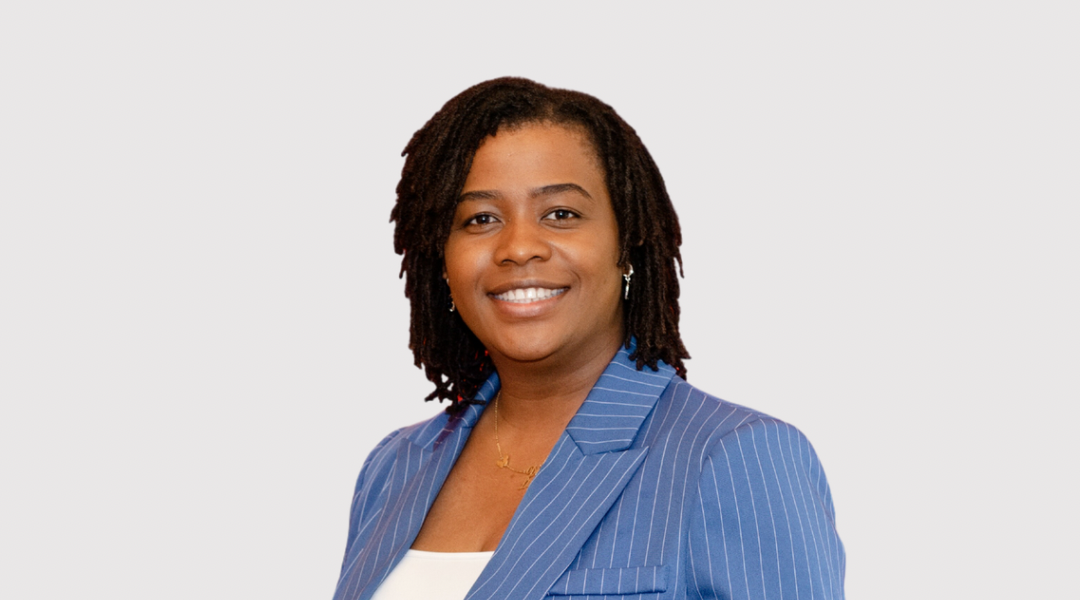
I lead Diembassy Inc., working to accelerate healthy adoption of AI among small and medium-sized enterprises (SMEs) worldwide. SMEs are the backbone of the global economy because nearly everyone interacts with an SME in some way; as a customer, an employee, a supplier, or someone affected by their decisions. Yet SMEs are often the least equipped to navigate emerging technology safely, and that gap is what drives our work today.
My path here started unexpectedly. As an investor in publicly traded companies, I first approached artificial intelligence out of necessity, not passion. When AI’s capabilities became public knowledge, it threatened several tech companies in my portfolio. To protect my investments, I had to understand the technology, including its potential, its limitations, the companies building it, and its real-world consequences. I treated it as due diligence, digging into investigative journalism and industry reports.
But the more I learned, the more my perspective shifted. AI’s potential for good was undeniable but so were its risks. Left unmanaged or misunderstood, those risks could cause harm at a scale far beyond what most people realize. So, that contradiction became the seed of my current mission. If AI is powerful enough to transform lives, people need access to it. But if it’s powerful enough to cause harm, people need to know how to use it responsibly. Now, through direct work with SMEs, we help business leaders not just adopt AI, but adopt it in ways that let its benefits outweigh its risks.
Tell us 3 surprisingly easy and 3 surprisingly difficult things about your business.
Three things have been surprisingly easy about this work. First, focusing on AI has been easy to justify because of the sheer scale of impact since AI is affecting people worldwide, so helping SMEs get its adoption right creates a ripple effect far beyond any single business. Second, connecting with people in the AI industry has been easier than expected, since the field is still relatively new and many professionals are open to collaboration and conversation. Third, finding AI tools to work with has been straightforward because the market is full of ready-made solutions, which means SMEs don’t need to build systems from scratch to start benefiting from AI.
At the same time, three things have proven surprisingly difficult. Finding the right tool for a given SME is harder than it sounds, simply because there are so many options to sort through. Helping SMEs manage cost is another challenge because the upfront investment in AI adoption can be steep, and while we work through pricing and matching solutions to budgets, it takes real effort every time. Finally, finding role-model SMEs willing to publicly share their AI adoption success stories has been surprisingly tough, since most businesses adopt AI to gain a competitive edge and are understandably reluctant to reveal what’s working for them.
What are the 3 things you like best about your work and why?
Three things keep me energized in this work. The first is the people because this journey has pulled me into rooms and conversations I never would have found on my own, connecting me with a constantly expanding circle of new faces. The second is the thrill of interviewing founders building AI tools; it’s like getting a front-row seat to innovation as it’s being built, watching ideas take shape before they ever reach the public. And the third is the learning itself. I’ve always been a curious person, but AI is a field that refuses to sit still. Just when you think you’ve caught up, something new emerges, and that constant motion is exactly what keeps me hooked rather than exhausted.
What are your greatest 3 skills and how have they helped you succeed?
Success in this work has come down to three core skills. I am, above all, a people person since I would rather be out talking with people than sitting behind a desk, and that genuine enjoyment of human connection has made this work feel less like a job and more like a calling, which is often the real recipe for success. I am also a purist at heart: I refuse to promote anything I don’t personally believe in, and that integrity has made people trust my recommendations rather than question them. And I’ve always had a knack for simplifying complex ideas, a skill that has not only helped me make sense of AI myself, but has also allowed me to translate it into language that everyday people, not just experts, can understand and act on.
Tell us about a time you were dead wrong about something.
Of course, even someone who prides themselves on understanding AI can get it wrong, and I certainly did. When ChatGPT’s release brought AI into the mainstream in 2022, my first instinct was skepticism. I had watched trends like Clubhouse and NFTs generate enormous hype before fading away, and I assumed AI would follow the same pattern. But as I watched companies like Anthropic, the makers of Claude, post exponential revenue growth, it became clear this was not a passing fad. I was dead wrong in dismissing AI as ephemeral and that miscalculation, in hindsight, became one of the pushes that led me deeper into this work.
Have you considered buying a business? Tell us about that experience.
I enjoy evaluating businesses for my own portfolio. Buying a business outright is something I’ve seriously considered more than once but I’ve consistently chosen a different route by owning pieces of publicly traded businesses through the stock market instead. It gives me the same ownership upside without tying my capital or my time to a single company, and it scales in a way that acquiring whole businesses simply can’t.
What do you value most and why?
As an entrepreneur, a value I hold above almost anything else in partnership or collaboration is honesty. It’s honesty, more than any single deal or outcome, that sustains trust, especially when things don’t go as planned. And trust, I’ve come to learn, is the real currency of long-term success in business.
What achievement are you the proudest of and why?
If I had to point to the achievement I’m proudest of, it wouldn’t be a single deal or milestone, rather it would be the courage to keep reinventing myself. Despite training and practicing as a dentist, I’ve allowed myself to explore the world through career transitions and travel, having now visited more than 20 countries along the way. I’m proud of having the courage to let go of the good in order to experience the great.
Who is your favorite motivational speaker and why?
That same spirit of reinvention is something I’ve drawn inspiration for over the years, particularly from the late Dr. Myles Munroe, whose teachings on leadership remain a touchstone for me. His insights have shaped the way I think about purpose, growth, and stepping into one’s calling. These are themes that resonate deeply with the path I’ve taken.
If you do charity or volunteer work, what is it and why do you do it?
That sense of purpose extends beyond my professional work into my charity efforts, where I find myself especially drawn to children, particularly orphans. As I often say, they didn’t ask to be born, yet life has handed them the difficult task of surviving without their parents. It’s this conviction that led me to build a free primary school for orphans in Warri, Delta State, in Nigeria — a project I count among the most meaningful of my life.
Are you willing to be a mentor? If yes, what is the best way to reach you?
Given how much of my work already centers on guiding others such as SMEs preparing to adopt AI, mentorship isn’t a separate commitment so much as an extension of what I do every day. Anyone interested in connecting can reach out through LinkedIn to start a conversation, or visit our website at www.diembassy.com to learn more.
Just for fun, what is your favorite food?
I’m not much of a foodie, but if I had to pick a favourite, it would be the burrito; a Mexican dish I enjoy now and then.