
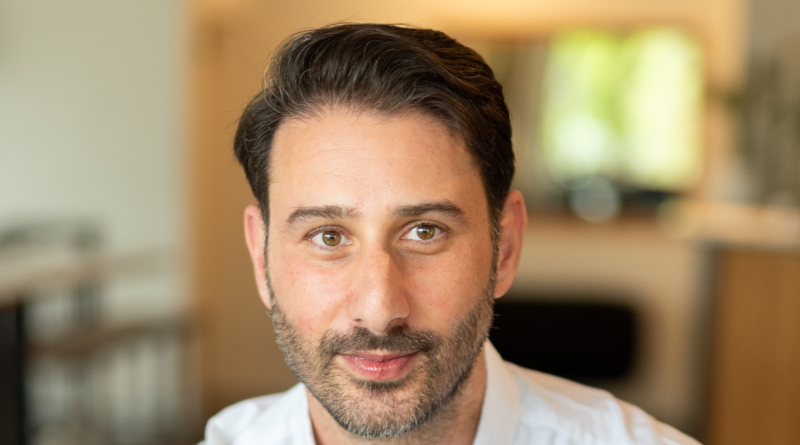
What made you want to do the work you do? Please share the full story.
I fell into marketing automation almost by accident, taking a role doing HubSpot integrations for a client-side company because it was the job available at the time, not because I had some grand plan around digital marketing. Six years into client-side roles, moving between companies like The Quote Company and Scope Systems, I noticed the same pattern everywhere, marketing teams generating activity without anyone being able to draw a straight line to revenue. I remember sitting with a CFO who asked me point blank why marketing spend kept increasing while sales stayed flat, and I didn’t have a good answer because nobody had built the system to track it properly.
That question stuck with me long after I left that role, and it’s really the reason I moved into agency leadership at Workhouse Advertising and eventually started Pathfinder in 2016. I wanted to build an agency where every recommendation traced back to something a business owner actually cared about, gross profit, customer acquisition cost, lifetime value, rather than clicks and impressions that look good in a slide deck but don’t pay anyone’s wages. A decade later that’s still the entire premise of how Pathfinder operates, and it’s the reason I still enjoy the work as much as I did when I signed the first client.
How is AI changing your business? What changes are you making to adapt?
AI has compressed the time it takes to do work that used to justify a chunk of an agency’s retainer, particularly around ad copy generation, basic SEO content, and first-draft campaign structuring. A task that used to take a strategist two days now takes a few hours with the right tools, which means the value we sell can’t be the labour anymore, it has to be the judgment applied on top of it. We’ve restructured how we price and staff accounts at Pathfinder because of this, moving away from hours-based thinking toward outcomes and strategy as the thing clients are actually paying for.
Internally, every team member at Pathfinder is now expected to use AI tools as part of their daily workflow, whether that’s drafting initial ad variations or building first-pass reporting summaries, but a human always reviews and adjusts before anything reaches a client. I’ve seen too many agencies let AI-generated content go out unchecked and it shows in generic messaging that doesn’t reflect how a Perth plumber’s customers actually talk versus how a Perth law firm’s clients do. The adaptation isn’t about resisting the tools, it’s about being ruthless around where human judgment still has to sit in the process.
If AI is impacting your business, please tell us 3 things you expect to change in the near future.
First, I expect client expectations around turnaround time to shift permanently, since if AI can produce a first draft of ad copy or a landing page in minutes, clients will start asking why anything takes days rather than hours. Second, I think the SEO landscape is going to keep fragmenting as AI-driven search results and chat-based discovery pull traffic away from traditional organic listings, which means agencies like Pathfinder will need to treat visibility inside AI answers as its own discipline rather than an afterthought bolted onto SEO. Third, I expect pricing models across the industry to move further away from hours billed and closer to performance-based structures, because clients will increasingly see the labour argument as weaker once they understand how much of the output involves AI assistance.
None of these changes worry me particularly, since Pathfinder already built its pricing and reporting around business outcomes rather than deliverables, but I do think agencies still selling hours and vanity metrics are going to feel real pressure over the next few years. The agencies that survive that shift will be the ones who can prove a human strategist is making decisions AI genuinely can’t make on its own, not the ones who can produce content the fastest.
What are your greatest 3 skills and how have they helped you succeed?
The first is financial literacy applied to marketing, which sounds unglamorous but it’s the skill that separates agencies that help clients from agencies that just spend their budget. I can sit across from a business owner and build a profitability model using their actual margins and lifetime value before we touch a single campaign, and that’s saved clients from spending on channels that were never going to work for their numbers. Most people in this industry come from a creative or technical background and treat the financial side as someone else’s job, but I built Pathfinder around the idea that if you can’t speak the language of gross profit and CAC, you can’t actually advise a business owner on anything that matters.
The second is the ability to translate technical detail into something a non-marketer can act on, a skill I picked up sitting in client-side meetings watching agencies lose the room the moment they started talking about quality scores and impression share. I still walk clients through exactly what’s happening in their account, but I’ve learned to anchor every explanation to a business outcome they already care about rather than a metric they’d need a glossary to understand.
The third is knowing when to say no to a client, which took me years to develop, and it’s saved more relationships than it’s cost, since turning down work that isn’t the right fit has kept Pathfinder’s retention rate far higher than agencies that take on anyone with a budget.
Tell us about a time you were dead wrong about something.
Early on I was convinced that ranking well organically was the ultimate goal for every client, and I pushed a law firm client hard toward an SEO-first strategy because I genuinely believed paid search was a lesser tactic for a business with their margins. We got them to page one for their key terms within eight months, and I was proud of that result until their intake numbers barely moved, because the people searching those terms weren’t actually ready to hire a lawyer that day. I had built my entire strategy around a vanity outcome, top rankings, instead of asking what their actual buyer journey looked like before committing months of work in one direction.
I had to go back to that client and admit the strategy I’d sold them wasn’t delivering, which was an uncomfortable conversation given how confident I’d been going in. We rebuilt the approach around paid search targeting people actively searching with intent to hire, and within two months their phone was ringing in a way eight months of organic work hadn’t achieved. That mistake taught me to never lead with a channel I personally believed in until I understood how that specific client’s customers actually made decisions, and it changed how I approach every new account at Pathfinder since.
What is the biggest challenge you face each day and how do you handle it?
The hardest part of running Pathfinder day to day is balancing the number of client accounts my team can genuinely give attention to against the pressure to keep growing the business. I’ve watched too many agencies take on client after client until quality drops across the board, and everyone ends up with mediocre results instead of a smaller group of clients getting real attention. Some mornings I’m looking at a pipeline of interested businesses knowing that saying yes to all of them would stretch my team past the point where we can deliver what we promise.
I handle it by treating capacity as seriously as I treat revenue targets, which means I’ve turned away paying work more than once because taking it on would have meant shortchanging existing clients. Every quarter I sit down and look honestly at whether our current client load matches what the team can actually execute well, not what looks good on a growth chart. It’s a harder discipline than it sounds, because saying no to revenue never feels natural, but it’s the only way I’ve found to keep the results consistent enough that clients stay for years instead of one disappointing campaign cycle.
What do you value most and why?
Honesty in reporting is the value I hold above everything else in this business, because I spent six years client-side watching agencies dress up disappointing numbers to protect the relationship rather than tell the client the truth. I watched a CFO get blindsided by a quarter of wasted ad spend because the agency managing the account kept the language vague enough that nobody caught the problem until the invoice was already paid. That experience left a mark on me, and I decided early that Pathfinder would never operate that way, even when the truth costs us a client relationship in the short term.
I value it because it’s the only foundation that makes a long-term agency relationship possible, since clients can tell within a few months whether an agency is protecting them or protecting itself. Every report we send out reflects what actually happened, good or bad, and every recommendation is grounded in what will genuinely help the client’s bottom line rather than what keeps the retainer running longest. It’s cost us short-term revenue more than once, but it’s the reason clients who’ve been with Pathfinder for years trust what we tell them without needing to second-guess it.
What achievement are you the proudest of and why?
Winning the Business News 40under40 award mattered to me, but it’s not what I’m proudest of, because that recognition came from people looking in from outside the business. What I’m actually proudest of is a plumbing client who came to us barely breaking even on their paid search spend, convinced digital marketing simply didn’t work for a trade business like theirs. We rebuilt their entire campaign around actual job value and service area targeting instead of generic lead volume, and within a year we’d driven over $500,000 in additional revenue for a business that had almost written off digital marketing entirely.
That result stuck with me because it wasn’t a flashy client or an industry known for glamorous marketing wins, it was a small trade business whose owner had genuinely lost faith that any agency could help him. Turning that around, and watching him hire two more staff to handle the volume of jobs coming in, is the kind of outcome that reminds me why I built Pathfinder around bottom-line results instead of the metrics that look good in an awards submission. That’s the version of success I actually care about, not the trophy on the shelf but the business owner whose company genuinely grew because of the work we did.
What is your favorite book and why?
My favourite book is Measure What Matters by John Doerr, which I read early in my agency ownership when I was still figuring out how to set goals for a growing team rather than just for myself. The framework around OKRs gave me language for something I’d been doing instinctively with clients, tying every activity back to a measurable outcome instead of vague ambitions, and it helped me apply that same discipline internally at Pathfinder. Reading how companies like Google and Intel used the framework to scale without losing focus made me rethink how I set quarterly goals for my own team.
What stuck with me most was the idea that a goal without a clear measure attached to it is just a wish, which is essentially the same argument I make to clients about vanity metrics versus real business outcomes. I still use a version of that framework internally at Pathfinder today, setting specific measurable targets each quarter rather than broad ambitions like grow the business. It’s a business book, not a marketing book, but it shaped how I think about accountability more than anything written specifically about digital marketing ever did.
What advice would you give to your younger self and why?
I’d tell myself to build the profitability model process for every client from day one instead of taking three years and a string of underperforming accounts to arrive at it. In my first year running Pathfinder I said yes to almost any client who could pay an invoice, including businesses whose margins simply couldn’t support what effective paid search costs, and I blamed my own execution for months before realising the real problem was the fit. That advice would have saved both me and a few early clients a lot of wasted time and money.
I’d also tell my younger self that saying no to work is a business skill, not a luxury reserved for agencies who’ve already made it. I spent too long believing that turning away revenue was something only established agencies could afford to do, when really it’s the discipline that protects your ability to deliver for the clients you do take on. If I’d internalised that earlier, I think Pathfinder would have built its reputation for consistent results a couple of years faster than it actually did.
Who has been your biggest mentor in life (personal or professional) and how have they helped you?
My biggest professional mentor was actually my manager during my time at Scope Systems, who taught me to think about marketing from the finance department’s perspective rather than the marketing department’s. He used to sit me down every month and make me explain campaign performance purely in terms of what it meant for the company’s bottom line, no jargon, no vanity metrics, just plain numbers a CFO would care about. At the time it felt tedious, but it fundamentally shaped how I built Pathfinder years later.
He also modelled a kind of directness I try to bring into how I run client relationships now, telling people the truth even when it’s uncomfortable rather than softening bad news to keep everyone happy in the short term. I’ve watched plenty of people in this industry avoid difficult conversations with clients because it feels easier in the moment, and I credit him with teaching me that avoiding those conversations always costs more later. That lesson has shaped nearly every client relationship Pathfinder has built over the past decade.
Just for fun, what is your favorite ice cream flavor?
My biggest professional mentor was actually my manager during my time at Scope Systems, who taught me to think about marketing from the finance department’s perspective rather than the marketing department’s. He used to sit me down every month and make me explain campaign performance purely in terms of what it meant for the company’s bottom line, no jargon, no vanity metrics, just plain numbers a CFO would care about. At the time it felt tedious, but it fundamentally shaped how I built Pathfinder years later.
He also modelled a kind of directness I try to bring into how I run client relationships now, telling people the truth even when it’s uncomfortable rather than softening bad news to keep everyone happy in the short term. I’ve watched plenty of people in this industry avoid difficult conversations with clients because it feels easier in the moment, and I credit him with teaching me that avoiding those conversations always costs more later. That lesson has shaped nearly every client relationship Pathfinder has built over the past decade.