
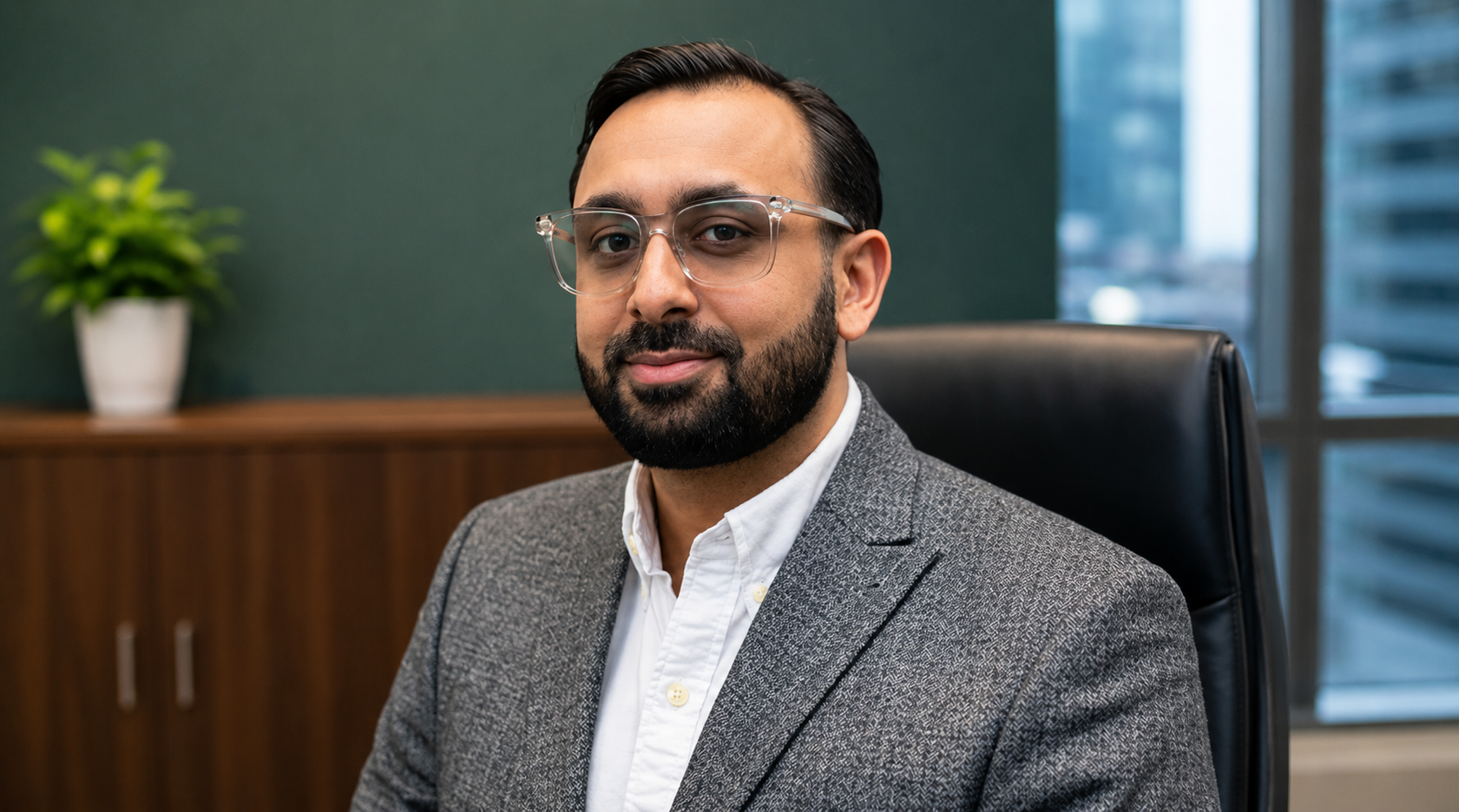
What made you want to do the work you do? Please share the full story.
I spent close to fifteen years in construction and building materials, running supply operations for commercial and residential projects across the UK. Somewhere around 2023 I started noticing a pattern that had nothing to do with concrete or timber. My own family used shilajit and ashwagandha the way you’d expect from an Ayurvedic household, and every time I tried to buy a proper batch for my mother, I ended up staring at a product page with no lab report, no origin details, and a price that made no sense for what was supposedly inside the jar. I know supply chains. That’s the one thing fifteen years in building materials actually gave me, and I could see this industry had the same problem I used to solve for construction clients: too many hands between the raw material and the buyer, each one adding markup and removing accountability.
Solvara started because I got tired of that gap. I built it the way I’d have built a materials supply contract, going straight to growers and traditional practitioners instead of brokers, and insisting on UK lab testing that customers could actually see rather than take on faith. I’m not a herbalist and I don’t pretend to be one. What I am is someone who spent a career making sure the thing in the box matches the thing on the label, and that’s the exact skill this industry was missing.
How is AI changing your business? What changes are you making to adapt?
AI has changed how customers vet a supplement brand before they ever land on our site. People screenshot ingredient lists into a chatbot now and ask whether shilajit resin should smell a certain way or dissolve at a certain rate, and they show up already knowing more than a customer would have five years ago. That shift pushed us to publish lab results proactively rather than making people ask for them, because a skeptical, AI-informed buyer will find the gap in your claims faster than a rep ever could.
On the operations side, we use AI tools for translating supplier documentation from growers we work with in India and Nepal, and for catching inconsistencies across batch reports before they reach a customer. It hasn’t replaced the sourcing relationships, which still require someone physically vetting a grower or a practitioner. What it’s done is compress the admin layer so more of my time goes toward supply chain integrity instead of paperwork.
What are the 3 things you like best about your work and why?
The first is sourcing trips themselves. Sitting with a grower who has processed shilajit the same way for two generations teaches you things no supplier catalog will ever tell you, like how altitude changes resin texture or why bitterness is actually a sign of authenticity rather than a flaw. The second is watching a product go from raw material to lab report, because that’s the exact transparency gap I started Solvara to close, and every clean test result feels like proof the model works.
The third is hearing from customers who’ve tried three other shilajit brands before finding one that actually behaves the way shilajit should. That feedback loop is rare in supplements, where most buyers never get certainty about what they’re taking. Getting to close that uncertainty for someone, even in a small way, is the part of this work that still surprises me given where I started professionally.
What are your greatest 3 skills and how have they helped you succeed?
The first is supply chain scrutiny, built over fifteen years of managing building materials contracts where a wrong shipment or an unverified supplier could cost a project real money. That instinct transferred directly into vetting botanical growers, since the questions are the same: who touched this before it got to me, and can I prove it. The second is contract and quality standards discipline from my quantity surveying background, which is why Solvara insists on independent UK lab testing rather than accepting a supplier’s own certificate of analysis.
The third is comfort with being an outsider in a room. I didn’t come into wellness with a herbalist’s credentials or a scientist’s lab coat, and early on that felt like a disadvantage. It turned out to be useful, because I ask the blunt sourcing questions an industry insider might not think to ask, and that skepticism is exactly what built Solvara’s transparency model.
Tell us about a time you were dead wrong about something.
Early on I assumed that if I found a grower with a good reputation and clean paperwork, that was enough to build a product around. I sourced an early shilajit batch based on a supplier’s own certificate of analysis, the same way I’d have accepted a materials spec sheet on a construction job, and I nearly moved forward without an independent UK lab test to confirm it. A colleague who’d worked in supplements pushed back and asked why I was trusting a document the seller wrote about themselves, which is a question I would have asked instantly in construction but somehow skipped here.
That batch tested fine in the end, but the process exposed how wrong my assumption was. Reputation and paperwork in the supplement world don’t carry the same accountability they do in a regulated industry like construction, where a bad spec sheet has legal consequences. I rebuilt Solvara’s sourcing policy around that mistake, and every batch since has gone through independent testing before it touches a product line, regardless of who the supplier is or how long we’ve worked with them.
What is the biggest challenge you face each day and how do you handle it?
The daily challenge is balancing speed against verification. Customers want new products and restocks quickly, and every supplier relationship comes under some pressure to skip a step when a shipment is running late or a batch is time sensitive. I handle it by refusing to let timeline pressure touch the testing process, even when that means telling a customer a product is delayed by two weeks because a lab result came back inconclusive rather than because we ran out of stock.
That rule exists because I’ve watched what happens in construction when someone cuts a testing corner to hit a deadline, and the failure always shows up later and costs more than the delay would have. Supplements carry the same risk, just with someone’s health instead of a building’s structure. So the challenge repeats daily, but the answer stays fixed: the lab result decides the timeline, not the calendar.
What do you value most and why?
I value being able to prove a claim rather than just make one. That comes directly from quantity surveying, where every measurement and cost estimate had to hold up against an audit, a client challenge, or a legal dispute. I carried that standard into Solvara because supplements are an industry built on claims nobody checks, and I wanted to run a company where every ingredient origin and purity statement could be backed by a document a customer could actually read.
It matters to me personally too, since Solvara started from watching my own family struggle to find a shilajit source they could trust. Valuing proof over marketing language is the difference between selling people hope and selling people something that actually does what the label says. That distinction is the whole reason this company exists.
How do you celebrate your victories?
When a new lab batch clears testing, I go straight to the person who sourced that particular grower relationship, because that verification is the win, not the sale that comes after. In construction I learned that the milestone worth marking is the inspection that passes, not the ribbon cutting, and that habit stuck with me here. So the small celebration is usually just a text to whoever spent weeks vetting a supplier in Nepal or India, telling them the resin came back clean.
For bigger milestones, like when Solvara hit its first full year in June, I took the whole small team out for a proper Indian meal in Ilford, the kind with dishes my mother would approve of. It felt right given where the company’s ingredients trace back to, and it’s become the marker I use for anything worth genuinely celebrating rather than just logging as a task completed.
What is your favorite movie and why?
My favorite is Lagaan. It’s a film about a group of farmers with no formal training who go up against people who’ve spent their whole lives mastering a system built to keep them out, and they win by outworking the assumption that credentials matter more than commitment. I came into wellness with a construction background and no herbalism degree, and there’s something about that story that mirrors the chip I’ve carried since starting Solvara.
The other reason is the setting. It’s rooted in rural India, the same region where a lot of our sourcing relationships trace back to, and watching it reminds me why I got into this in the first place. It’s not really about supplements at all, it’s about proving something to people who assumed you couldn’t.
What advice would you give to your younger self and why?
I’d tell him not to wait fifteen years to trust that skepticism is a skill, not a personality flaw. In construction I was the guy who double checked every supplier invoice and questioned every spec sheet, and for a long time I saw that as just being difficult. It turns out that exact instinct is the entire reason Solvara can promise lab-tested purity when most of this industry can’t.
I’d also tell him that a career built in one field doesn’t disqualify you from starting fresh in another. I spent years assuming quantity surveying and construction management were the whole story of my professional life, and it took watching my own family struggle to find trustworthy shilajit to realize those skills transfer directly into an industry I’d never worked in.
Who has been your biggest mentor in life (personal or professional) and how have they helped you?
My father shaped how I think about business more than anyone. He ran his own building materials supply operation for decades before I ever got into quantity surveying, and he was the one who taught me that a supplier relationship is worth more than a supplier discount. Watching him refuse to work with vendors who cut corners, even when it cost him a cheaper price, is the exact model I used when I started sourcing botanicals directly from growers instead of going through brokers.
He never touched the wellness industry and wouldn’t recognize half the ingredients Solvara sells, but the underlying lesson translated completely. Go to the source, verify everything yourself, and don’t let margin pressure change your standards. That’s as much his business philosophy as it is mine now.
Just for fun, what is your favorite ice cream flavor?
Pistachio, without much competition. There’s something about the slightly bitter edge to a good pistachio that I’ve come to associate with quality the same way I judge shilajit, since the products that taste “too clean” or overly sweet usually mean something’s been added that shouldn’t be there. It’s probably an odd way to think about dessert, but once you start evaluating everything through a purity lens, it’s hard to turn that off.