
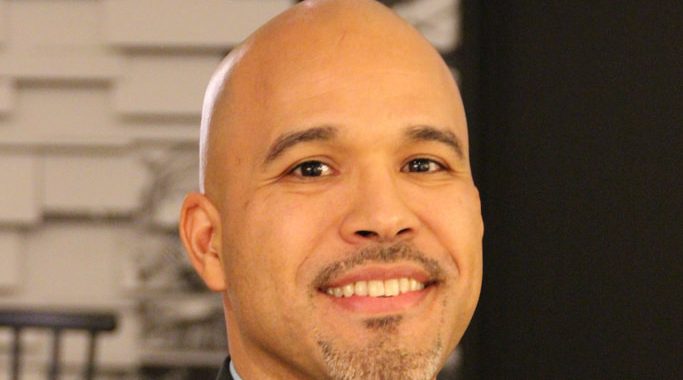
Art Serna is an executive leader, storyteller, and systems innovation strategist who has spent more than two decades reshaping how institutions approach social impact and human development. His career spans government, nonprofit leadership, philanthropy, and ecosystem design, and his work consistently centers on building structures that honor dignity, agency, and long term community well being. Art previously served as the Chief Executive Officer of City on a Hill in Milwaukee, where he led major initiatives that expanded access to medical, dental, and behavioral health care for underserved families. Under his leadership, the organization strengthened its community partnerships and advanced multimillion dollar efforts that supported long term neighborhood renewal. Earlier in his career, he held a senior role with Teach For America, where he helped secure significant statewide investment that strengthened teacher pipelines serving thousands of students each year. Today, Art is the founder of Cosmos Renewed, a design and strategy studio in Milwaukee that helps leaders, philanthropists, and mission driven organizations navigate complexity and redesign systems for a regenerative future. His work blends foresight, coaching, and ecosystem design to help institutions create healthier, more adaptive models for learning, community well being, and collaborative leadership. A first generation college graduate and bilingual communicator, Art brings a rare mix of analytical clarity and creative empathy. His leadership continues to inspire bold thinking, unlock investment, and guide others toward designing systems that help communities thrive.
Your career has spanned government, nonprofits, and now systems-level consulting. What internal motivations have remained constant across these transitions, and how do they shape your approach to social impact today?
At every stage of my career, I have been driven by a belief that human potential expands when systems honor dignity and possibility. My motivation has always been to repair what is broken and to help leaders imagine a broader range of options. I am energized by complexity because it shows where transformation can take place. My purpose has remained steady. I create models that serve people instead of processes. This requires careful listening and an understanding of cultural context. I focus on building structures that invite collaboration. That commitment influences every transition I have made.
You have taken on major initiatives from expanding healthcare access in Milwaukee to securing statewide investment for teacher pipelines. What is the most significant professional risk you have taken, and how did it change your leadership philosophy?
The most significant risk I took was leaving a stable executive track to create Cosmos Renewed. I stepped away from familiar structures. I had to rebuild my identity in a new environment. This decision required trust in my instincts. It forced me to embrace uncertainty and to value creative thinking as much as strategic planning. The experience taught me that leaders must sometimes release old systems to build what communities truly need. It shaped my belief in regenerative leadership. Courage and humility must work together. Taking that risk showed me that uncertainty can become a tool for better design.
Cosmos Renewed focuses on regenerative health systems and personalized learning. What gaps or failures in current social impact models convinced you that the industry needed a regenerative approach?
Traditional social impact efforts often respond to immediate problems without addressing deeper causes. I saw many organizations create programs that sat on top of outdated structures. These programs offered support but did not shift long-term outcomes. The issue was not passion or funding. The problem was that systems were not built for lasting well being. Regeneration asks us to look at entire ecosystems instead of isolated activities. It values agency, reciprocity, and learning. I watched short term solutions fall short for many years. That experience convinced me that we needed approaches that rebuild trust and support community ownership.
You often work in complex settings with many stakeholders. What fears or concerns do you navigate when designing systems that affect real communities, especially underserved populations?
My greatest fear is that I might unintentionally reinforce the same inequities that we are trying to solve. Systems work can drift into theory and lose sight of real people. I worry about solutions that look strong on paper but fail because affected communities were not involved. I also fear that institutions will move too quickly toward innovation without preparing for cultural change. I address these concerns through deep listening and constant feedback. I try to share leadership whenever possible. The goal is not perfection. The goal is a design process grounded in humility, accountability, and an openness to adjust.
From your perspective, what is the most urgent issue facing the social impact sector today, whether policy, funding, equity, or something more foundational?
The most urgent issue is the growing distance between institutions and the communities they want to serve. Many systems were created in another era. They struggle to respond to the complexity of the present moment. Funding structures reward short-term data instead of long-term change. Organizations still work in isolated spaces and lose the chance for collective action. We also see a profound crisis of trust. People doubt that large institutions can deliver meaningful change. The sector must shift toward collaboration and community direction. We must move from managing problems to creating conditions where people can thrive.
As a first-generation college graduate, how has your personal journey shaped your empathy, decision-making, and approach to power dynamics in institutional settings?
My journey as a first-generation college graduate taught me the value of empathy and persistence. I learned how to navigate systems that did not always understand my story. This experience influences the way I lead. I elevate voices that are overlooked. I remain deeply committed to equity because I have lived the challenges that many families still face. My background helps me bring different groups together. It helps me translate across perspectives. It reminds me to design with inclusion at the center. Leadership begins with personal understanding before it becomes positional authority.
Your work blends foresight, coaching, and ecosystem design. What does effective leadership look like to you in an era defined by uncertainty, rapid change, and social fragmentation?
Effective leadership today requires clarity and curiosity. Many problems are interconnected and complex. Linear solutions fall short. Leaders must learn to spot patterns and guide teams through uncertain environments. They must create cultures that support learning instead of compliance. Emotional intelligence is essential. Leaders must help people feel seen and supported. They must also encourage a broader view of systems. They hold space for different viewpoints. They navigate conflict with integrity. Most of all, they plan for the long term. They focus on outcomes that strengthen communities for many years to come.
Mentorship is a recurring theme in your career. How do you approach mentoring the next generation of leaders, and what qualities do you believe are most important for emerging changemakers?
Mentorship is a shared journey. I do not view it as a top-down relationship. I help emerging leaders identify their purpose. I support them as they find confidence in their ideas and values. I encourage them to explore complexity instead of avoiding it. I also stress the importance of self-awareness and relational thinking. I am open about the mistakes I have made. This permits them to learn without fear. Future leaders need strategic skills and emotional resilience. A good mentorship experience should support both areas. Specifically, I have grown significantly as a mentor through the practice of conscious leadership frameworks.
Are there particular books, thinkers, or frameworks that have influenced how you understand regeneration, equity, or collaborative systems?
Several thinkers have shaped my perspective. The work of Peter Senge introduced me to systems thinking as a practical discipline. The writing of Adrienne Maree Brown helped me understand the role of adaptive change grounded in relationships. The ideas of Otto Scharmer encouraged me to lead from the future rather than the past. The work of Bryan Stevenson taught me the importance of proximity and narrative in equity efforts. These thinkers remind me to approach systems change with humility. They reinforce the need to design environments that honor dignity and support collective thriving.
Looking ahead, what long-term future do you envision for communities if organizations begin adopting regenerative models at scale, and what role do you see yourself playing in that transformation?
If regenerative models expand across systems, communities will experience support that adapts to their real needs. They will see investments focused on long-term well-being. Trust between institutions and residents will grow. Health systems will shift toward prevention. Education will become more personalized. Collaboration will replace competition in many local spaces. My role is to help leaders imagine this shift. I want to support the strategies that make it real. I aim to guide teams as they move from reactive thinking to regenerative thinking. I want to help turn new ideas into lived experiences.